WhatsApp Business has long been a go-to tool for businesses wanting to chat with customers. Its familiarity makes it appealing – after all, most people already use WhatsApp daily to stay in touch with friends, family, and distant relatives. Bringing this familiar interface and its intuitive messaging algorithms into business communication seems like a perfect fit.
But as teams grow and businesses dive deeper into the rules of corporate communication, the picture changes. Companies start noticing risks like data breaches, sudden account blocks, and legal or compliance issues. In other words, the convenience comes at a cost – and not all businesses are ready to pay it. That’s why more companies are exploring alternatives.
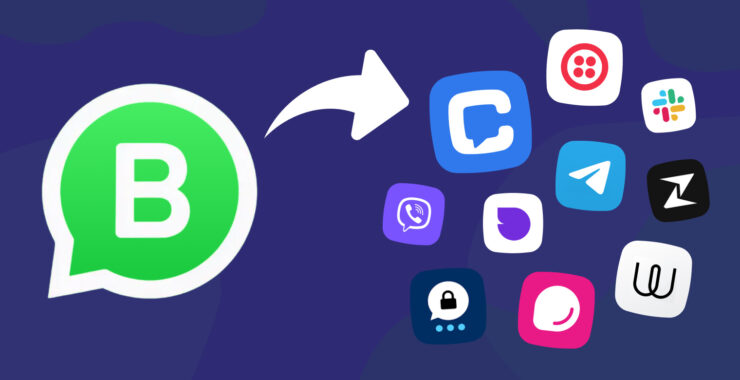
Businesses today are looking for tools that combine the ease of familiar messaging with stronger security, better multi-channel support, and automation capabilities. In this article, we explore why businesses are seeking WhatsApp Business alternatives, what they expect from a messaging platform, and which tools are leading the way. Some of the notable options we review here include:
- Chanty – a team communication tool combining chat and task management in one place.
- Zixflow – secure business messaging with compliance-focused features.
- Wire – encrypted messaging designed for team collaboration and privacy.
- Twilio – programmable messaging platform for integrating chat into apps and workflows.
- Slack – popular team collaboration software with messaging, integrations, and workflow tools.
- Threema – privacy-first messaging app focused on security and anonymity.
- DelightChat – customer support chat tool with multi-channel integration.
- SendBird – messaging API platform for in-app chat and customer engagement.
- Telegram for Business – flexible messaging platform with channels, bots, and automation.
- Viber – multi-platform messaging with voice, video, and community features.
These tools represent a mix of secure messaging, multi-channel communication, and workflow integration, each designed to meet the evolving needs of modern businesses.
Why businesses are switching from WhatsApp?
The shift around WhatsApp Business isn’t as simple as “everyone is leaving.” Instead, businesses in are reassessing how WhatsApp fits into their tech stack, and whether it still works as their primary communication channel. While WhatsApp Business continues to grow globally, the day-to-day experience for many companies is becoming more complicated, and that’s where the search for WhatsApp alternatives begins.
A big reason is account stability. Over the past few years, businesses have seen sudden blocks, verification delays, and unexpected feature restrictions. Even though WhatsApp Business remains popular, companies are becoming more cautious. When your customer communication channel can disappear overnight, relying on a single app becomes a risk few teams are willing to take.
Another driver is compliance. With GDPR interpretations evolving, Digital Services Act enforcement increasing, and regional privacy laws tightening, companies need communication tools with advanced admin controls, audit logs, and transparent data processing. WhatsApp Business was built as a consumer-first messenger, and that consumer foundation makes compliance harder for organizations with strict governance standards. Unfortunately, WhatsApp lacks certifications such as HIPAA, GDPR, or FINRA.
At the same time, this year marks a clear shift toward multi-channel messaging. Modern customer journeys don’t start and end in a single app. Businesses want to combine email, SMS, web chat, social messengers, and voice in one place – something WhatsApp Business simply isn’t designed for, even with its API. Companies that outgrow a single-channel environment naturally look toward platforms offering more flexibility.
Automation is another factor. Teams now expect smart routing, AI-powered replies, workflow builders, and scalable automation – not just simple templates or basic auto-responses. WhatsApp Business provides entry-level tools, but most modern support and sales operations need automation that’s native, customizable, and robust across multiple channels.
So the trend isn’t a mass departure from WhatsApp Business – it’s a shift in expectations. As companies grow, they need tools that offer more control, more channels, and more long-term stability. And that’s why many teams are actively exploring WhatsApp alternatives that better support automation, compliance, and multi-channel communication without the unpredictability of a consumer messenger.
Best alternatives for WhatsApp Business
1. Chanty
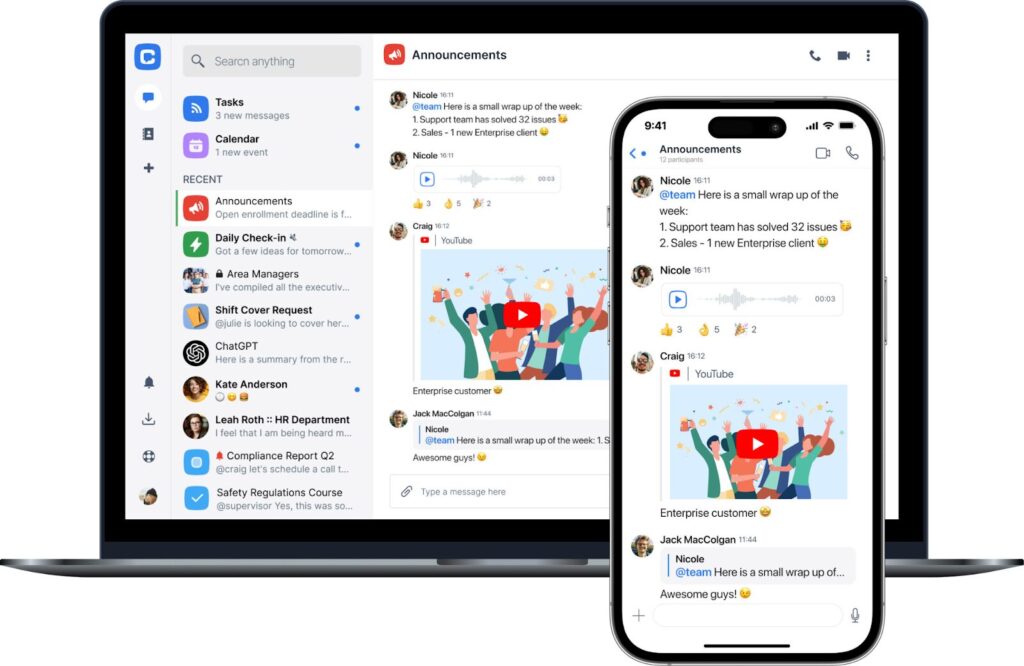
Chanty stands out as a powerful alternative for teams that have outgrown single-channel messengers like WhatsApp Business. It’s designed not just for chatting, but for managing the full flow of team communication and day-to-day work. Inside one platform, you get organized chat channels, voice and video calls, screen sharing, file collaboration, and a built-in task manager that helps teams turn conversations into actionable work.
What makes Chanty especially appealing is how well it supports internal operations. Businesses that need stable communication, clear structure, and predictable workflows find Chanty far more reliable than consumer-focused apps. Instead of juggling separate tools for messages, tasks, and updates, teams can keep everything connected and searchable in one place.
Key strengths:
- Built-in task management: Convert messages into tasks and view them as a Kanban board or list.
- Unlimited communication: Public and private chats, voice messages, one-on-one audio/video calls included in the free tier.
- Business plan (~$3/user/month annually): Unlocks unlimited group calls, screen sharing, company directory, onboarding tools, and app integrations.
- Admin and compliance controls: Roles and permissions, data retention policies, and optional HIPAA, GDPR, and FINRA compliance for sensitive industries.
Why it stands out as a WhatsApp Business alternative:
- While WhatsApp Business is great for messaging customers in a familiar consumer app, Chanty is built around teams and workflows: ideal if you need internal coordination + customer interaction.
- You’re not tied to “just chat” – you get calls, tasks, integration with your internal tools, unified history.
- If your business is scaling, needs transparency of tasks/messages, or a more structured workspace, Chanty provides more than just message exchange.
Things to cinsider:
- If your primary use case is simple 1‑on‑1 chats with customers and you don’t need tasks/boards, it might feel like overkill.
2. Zixflow

Zixflow is a business‑centric communication and automation platform designed for outreach, customer engagement and multi‑channel messaging – rather than just replacing WhatsApp Business as another “chat app.” It’s built for marketing, sales and service teams who want automation, segmentation and multi‑channel coverage.
Key strengths:
- Multi‑channel reach: WhatsApp, SMS, RCS (Rich Communication Services), email all from a single workspace.
- Visual automation workflows: drag‑and‑drop builder to create sequences, no coding required.
- Unified inbox: all incoming messages across channels seen in one place; incoming + outgoing messages supported.
- Strong security & compliance: end‑to‑end encryption, GDPR readiness, enterprise grade.
- Flexible pricing: Free tier for basic; paid tiers (from ~$39/month +) for more features.
Why it stands out as a WhatsApp Business alternative:
- If your business uses WhatsApp Business but is frustrated by its single‑channel nature, Zixflow broadens the scope – you can continue using WhatsApp but also leverage RCS, SMS, email.
- It adds automation, CRM integration, segmentation and data‑driven outreach – something WhatsApp Business alone doesn’t focus on.
- Ideal for companies scaling customer engagement, managing large outreach campaigns, or wanting a unified tool rather than scattered apps.
Things to consider:
- It’s less of a “drop‑in chat app” and more of a platform; there may be a steeper learning curve.
- If your use case is simple customer chat and you don’t need multi‑channel or automation, you might not need all its power.
3. Wire
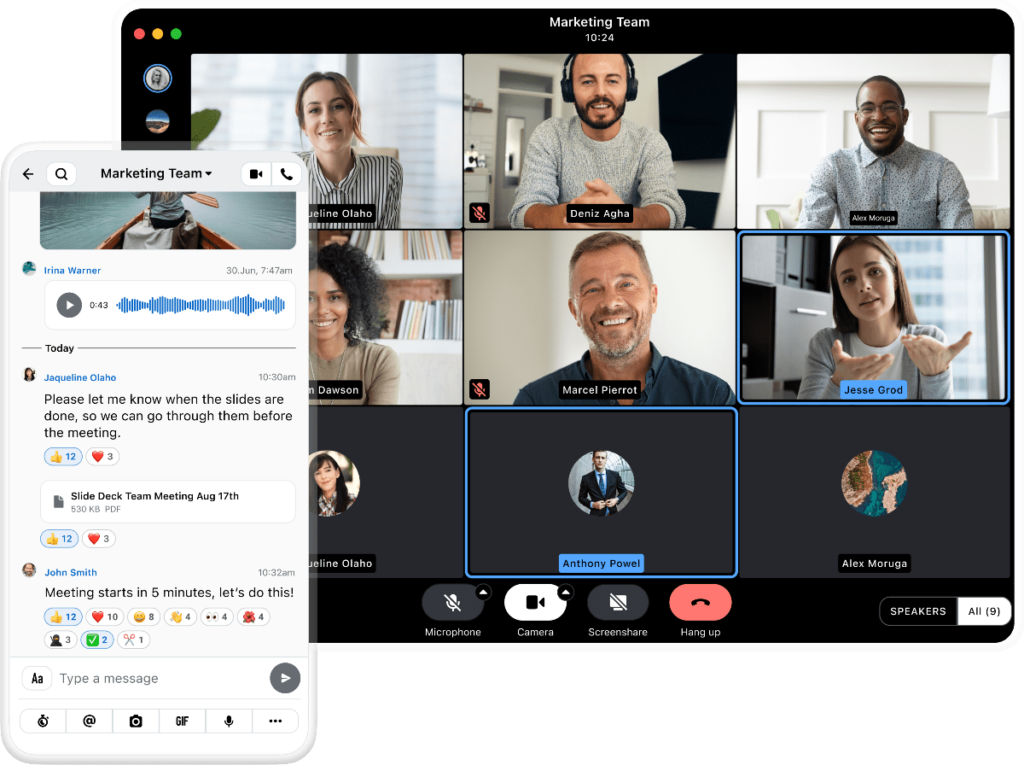
Wire is a secure communication platform built for teams and businesses where privacy and data control matter. It offers chat, voice/video, file sharing and supports enterprise‑grade encryption, making it a serious alternative for companies concerned about data safety and control.
Key strengths:
- End‑to‑end encryption across chats, calls and media.
- Messaging Layer Security (MLS) enabling larger group support (up to 2,000 users) and multi‑account/back‑end flexibility for enterprise.
- Multi‑platform support (desktop, mobile, web) with guest rooms, device fingerprinting, secure file sharing.
- UI improvements and easier navigation focus for better usability.
Why it stands out as a WhatsApp Business alternative:
- While WhatsApp Business is popular for its familiarity and reach, Wire offers far stronger control, encryption and structure for business use – especially if customer chats include sensitive data.
- Useful for organizations where compliance, security, and internal collaboration matter as much (or more) than just customer messaging.
- If you need to host multiple accounts or separate work/personal channels securely, Wire’s multi‑backend support is a plus.
Things to consider:
- Adoption may be slower since many customers or partners may not already use Wire.
- Fewer “consumer” features or mass‑market audience compared to WhatsApp; may require encouraging your contacts to join.
4. Twilio
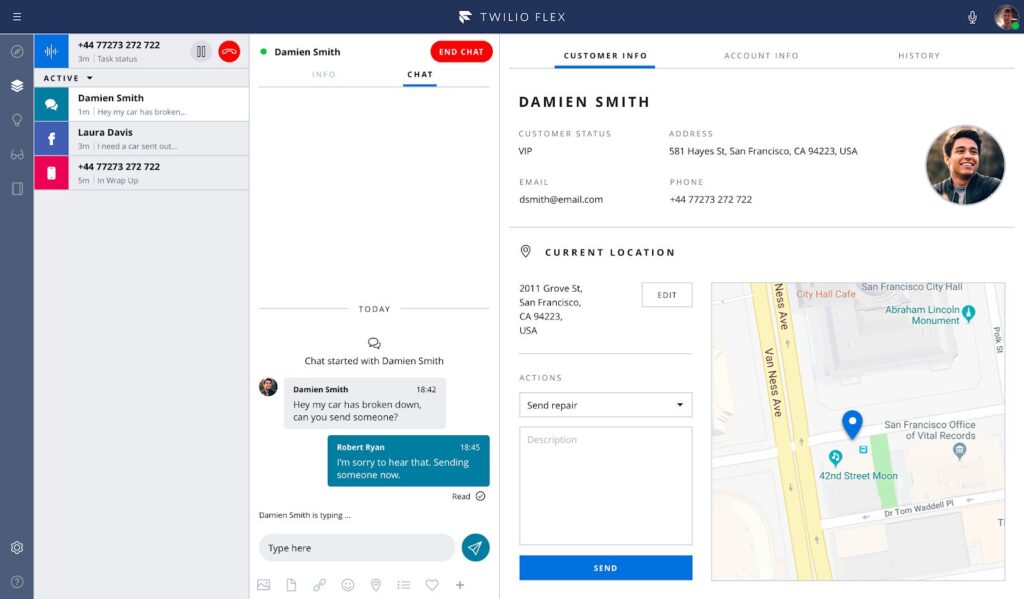
Twilio is a highly scalable, programmable messaging platform rather than a simple drop‑in chat app. It gives businesses the flexibility to build custom chat/notification systems across channels, including SMS, MMS, RCS, and WhatsApp – making it suitable for companies whose messaging needs go far beyond what WhatsApp Business offers.
Key strengths:
- One API to reach SMS, MMS, RCS, WhatsApp and web/web‑app chat.
- Features built in for enterprise: message logs, delivery monitoring, compliance tools (e.g., for global regulations such as GDPR, HIPAA)
- Pay‑as‑you‑go model: first 200 monthly active users free for in‑app chat (web/in‑app) then scale up.
Why it stands out as a WhatsApp Business alternative:
- If your business already uses WhatsApp Business but finds its limitations – e.g., limited automation, no unified cross‑channel support – Twilio gives you “build your own” power.
- You can retain WhatsApp channel within Twilio if needed, but also use SMS, RCS, and embed chat in your website or app.
- Best for businesses that want deep integration, customization, large scale or multi‑regional reach.
Things to consider:
- It’s more complex: you’ll likely need developer resources.
- Not as “plug‑and‑play” as a standard business messaging app.
- Costs and setup may be higher if your use case is simple one‑on‑one chat.
5. Slack
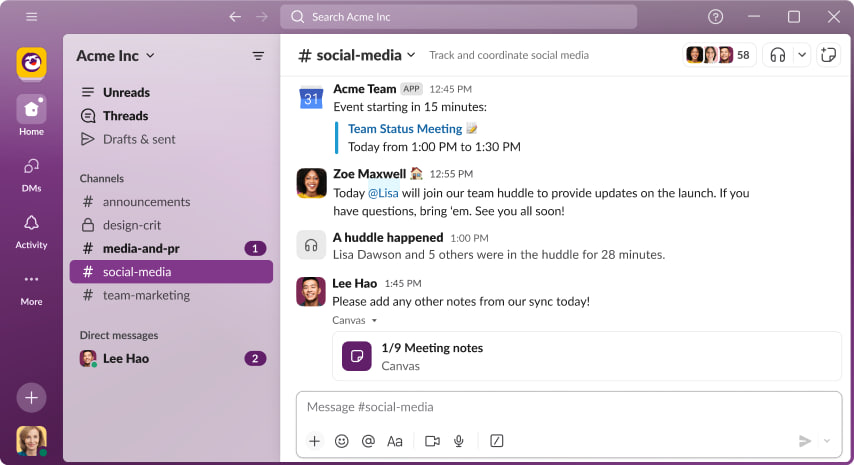
While Slack is not traditionally positioned as a direct customer messaging replacement for WhatsApp Business, it offers robust team collaboration and messaging features, making it a relevant alternative for business‑oriented communications and internal + external workflows.
Key strengths:
- Channels, threads, integrations with hundreds of apps, bots, and workflows.
- Supports file sharing, voice/video calls, automation (via Slack apps/workflows), and an extensive ecosystem.
- Strong adoption within companies for internal communication; can be extended to support and customer‑interaction workflows.
Why it stands out as a WhatsApp Business alternative:
- If your business communication is more than just chat with customers, but includes internal teamwork, support coordination, integrations and workflow automation, Slack offers more than WhatsApp Business.
- You can centralise team and customer interaction in one place rather than using WhatsApp plus a separate support system.
Things to consider:
- On its own, Slack may not cover large‑scale broadcast messaging or external customer chat as seamlessly as other alternatives.
- You may still need add‑ons or connector tools for full external customer‑messaging support.
- User adoption externally may be lower (customers may not already use Slack) compared to WhatsApp.
6. Threema
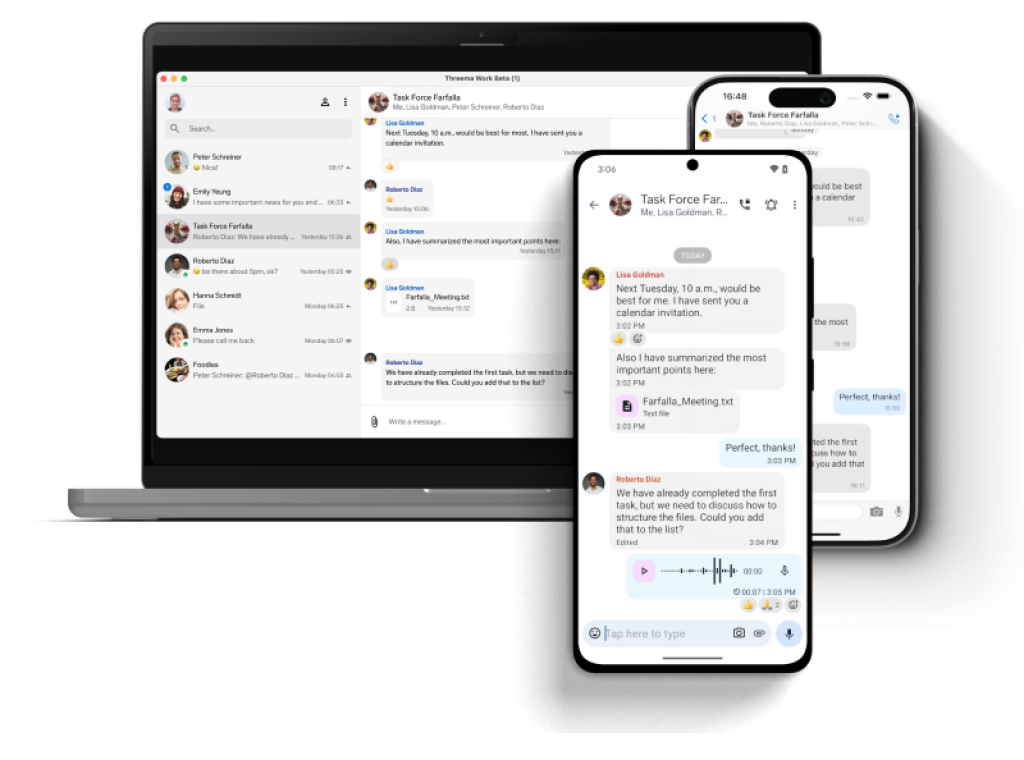
Threema is a Swiss‑based secure messaging platform focused on privacy, anonymity and business‑grade communication. It’s a strong pick if your business is very sensitive about data security or operates in heavily regulated industries.
Key strengths:
- End‑to‑end encryption of messages, voice and video.
- Supports business versions (like Threema Work, Threema OnPrem) tailored for organisations and enterprises with user‑management, config settings and secure architecture.
- Doesn’t require a phone number or email to register (in some configurations) – helping preserve anonymity.
Why it stands out as a WhatsApp Business alternative:
- If you’re looking for a WhatsApp Business substitute but one with far stronger privacy, less dependency on large consumer platforms, or need compliance (GDPR, Swiss data‑laws), Threema stands out.
- It lets businesses communicate without exposing personal numbers or relying on mainstream consumer apps.
Things to consider:
- The user base is smaller and less mainstream compared to WhatsApp – meaning your customers may not already use Threema, so adoption may require prompting.
- Feature‑set tailored around secure chat rather than full marketing/broadcast workflows – so if you need large‑scale broadcasts, multi‑channel automation, you may find limitations.
7. DelightChat
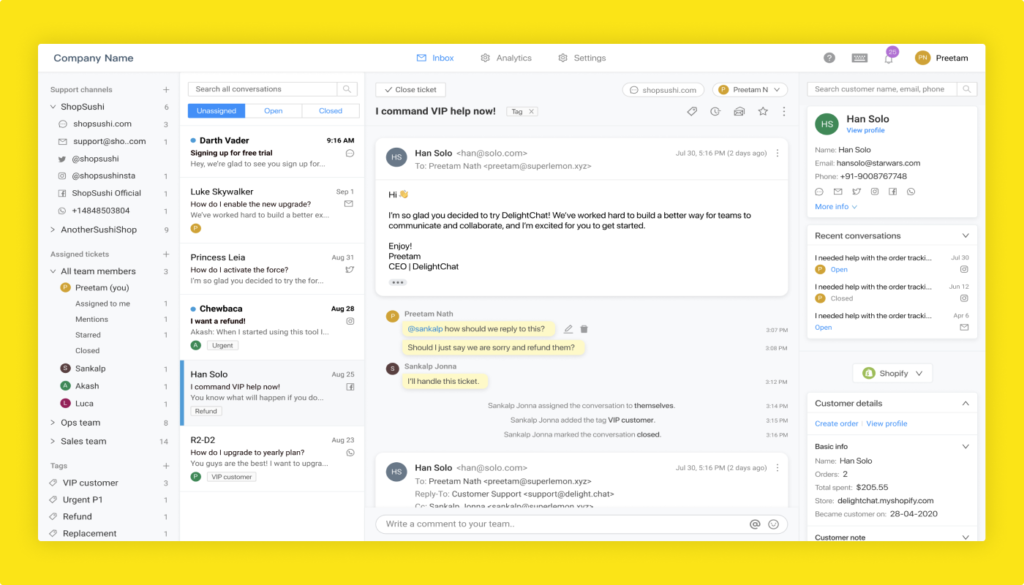
DelightChat is an omnichannel customer support and marketing tool built especially for e‑commerce brands. It’s a very different type of alternative to WhatsApp Business: instead of just messaging, it focuses on support and marketing across channels, with strong automation and integration into e‑commerce workflows.
Key strenghts:
- Unified inbox: Manage WhatsApp, Instagram DMs, Facebook comments, email and live chat from one dashboard.
- Marketing automation: Abandoned‑cart recovery via WhatsApp API, order tracking notifications, self‑service widgets, deep Shopify integration.
- Designed to get set up quickly, used by many D2C brands, and positioned with “ridiculously simple” UX for customer service teams.
Why it stands out as a WhatsApp Business alternative:
- If your business uses WhatsApp Business but is frustrated by its limitations in marketing, automation, multi‑channel support or e‑commerce integration, DelightChat gives you that next step.
- It still uses WhatsApp as one channel, but wraps it in broader support/marketing workflow, making it more business‑ready.
Things to consider:
- It’s primarily e‑commerce/support‑focused; if your primary focus is internal team chat or broad multi‑channel messaging (outside e‑commerce), you might want a more general tool.
- It may require paying for the e‑commerce/marketing features, so check pricing relative to your business size.
8. SendBird
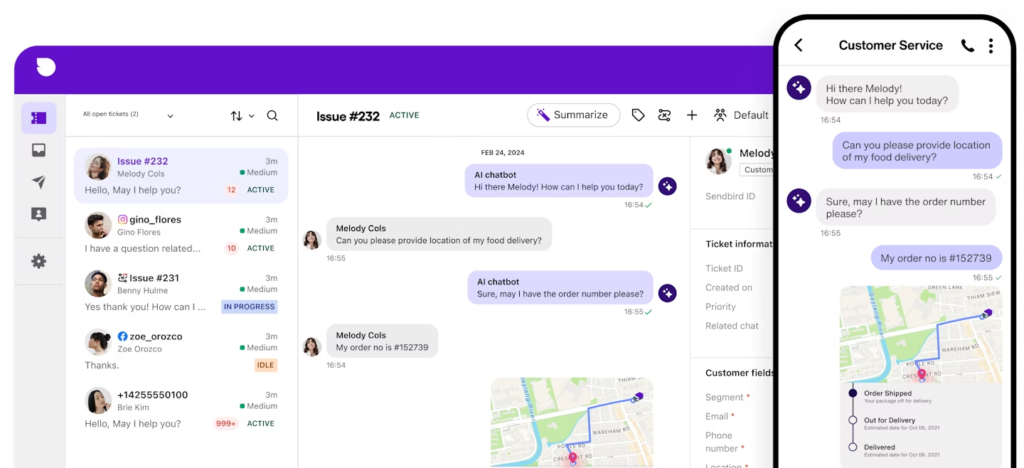
SendBird is a chat/messaging API platform aimed at embedding real‑time communication (chat, voice, video) into apps, websites and platforms – for companies that need full control and customization rather than a standalone messenger.
Key strenghts:
- Feature‑rich chat API & SDKs: 1‑on‑1 chat, groups, open channels (“community”), media sharing, polls, threading, advanced moderation and analytics.
- High scale: trusted by thousands of customers, built for high message volumes, secure and global.
- Full customization: you can design chat UX, embed it in your own app/web, control data location, integrate deeply with your backend.
Why it stands out as a WhatsApp Business alternative:
- When your business is not just using a messaging app but building a native chat experience (e.g., within your product), you gain far more control than just using WhatsApp Business.
- It supports large communities, custom workflows and advanced features often missing from standard messengers.
Things to consider:
- Developer resources required; more of a “platform” than a plug‑and‑play app.
- If your use case is simple customer messaging and you don’t need deep customization, this may be more than you need.
9. Telegram for Business
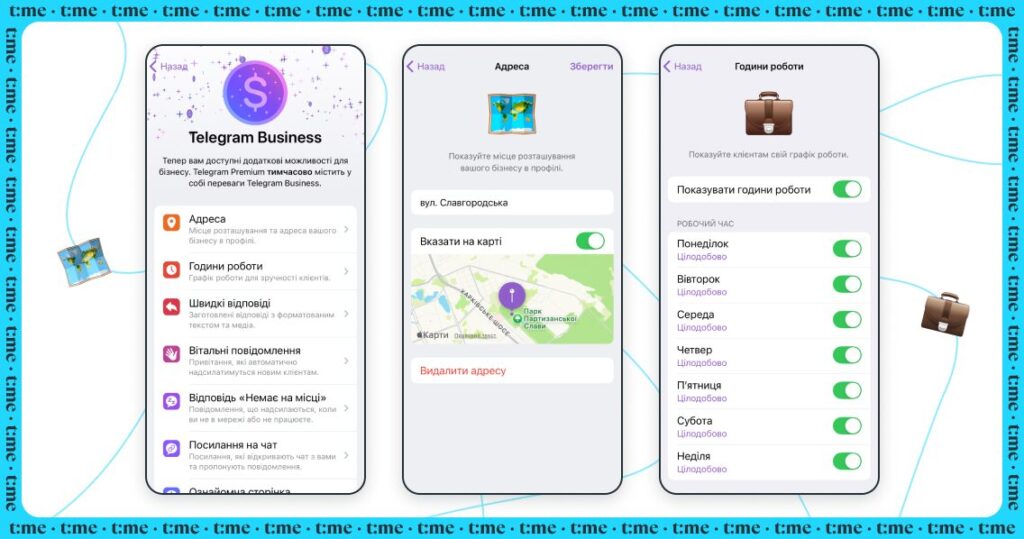
Telegram offers broad messaging features including large groups/channels, bots, automation and cloud‑based storage, which makes it a viable alternative to WhatsApp Business – especially for businesses interested in broadcast, community engagement or automated workflows.
Key strenghts:
- Channels & groups can be very large, bots have deep capabilities (sending messages, automations), media and storage unlimited in many cases.
- Cloud‑based sync across devices; accessible via web, desktop, mobile.
- Some regional audiences use Telegram heavily, giving businesses access to niche/engaged communities.
Why it stands out as a WhatsApp Business alternative:
- If your business engages large audiences, runs broadcast‑style messaging (e.g., community engagement) or uses bots for automation, Telegram offers more flexibility than WhatsApp Business.
- It may fit businesses that want to go beyond customer chat to audience building, automated interaction or group communication.
Things to consider:
- User adoption: your customers must already use or accept Telegram (which may vary by region).
- Some features (e.g., for regulated marketing) may require deeper setup or care around compliance and segmentation.
10. Viber
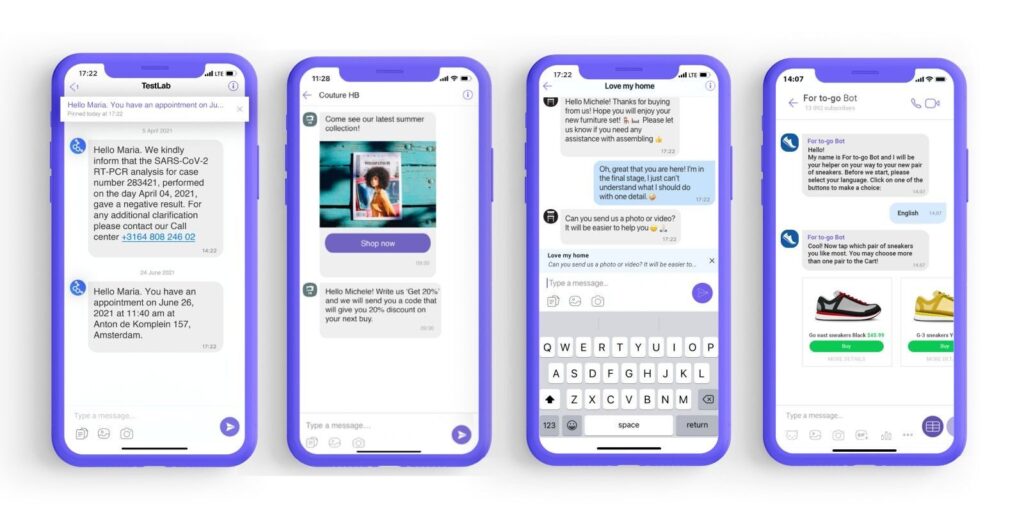
Viber Business Messages is a platform that enables branded, rich‑media messaging, broadcast campaigns, interactive content and strong reach in specific markets (particularly Eastern Europe, Ukraine and similar). It’s a robust alternative when WhatsApp Business may be less optimal or when you want broadcast/marketing features.
Key strenghts:
- Supports rich content: images, videos, buttons, interactive carousels; up to 1,000 characters per message vs 160 in SMS.
- Business profile: “blue tick” verification, brand sender name, business inbox pinned to top of chats, SMS fallback for non‑users.
- Global reach (1 billion+ users in 190+ countries).
Why it stands out as a WhatsApp Business alternative:
- If your customers are in regions where Viber is widely used (Ukraine, parts of Eastern Europe), using Viber Business Messages may reach them more effectively than WhatsApp.
- If you need broadcast messaging, rich content, branding and interactive campaigns, Viber offers features tailored for that.
Things to consider:
- Registration/approval process for business account and sender may require more setup.
- Success depends heavily on whether your target audience uses Viber; in markets where WhatsApp dominates, Viber may have less reach.
WhatsApp Business alternatives at a glance
| Tool | Key Strengths | Automation & Multi-Channel | Security Level | Best For |
| Chanty | All-in-one team chat, video calls, and built-in task manager | Internal workflows, message-to-task, Kanban view | Business-grade encryption, role-based access | Teams wanting an organized, secure workspace for daily collaboration |
| Zixflow | Multi-channel engagement platform (SMS, WhatsApp, Email, RCS) | Strong automation with AI workflows and CRM integration | Enterprise-grade (GDPR compliant) | Companies running marketing or customer communication campaigns |
| Wire | Highly secure messaging for enterprises | Internal collaboration, secure file sharing | Military-level end-to-end encryption (MLS protocol) | Organizations with strict privacy/compliance needs |
| Twilio | Developer-friendly communication APIs | Fully programmable automation across channels | High enterprise compliance | Tech-savvy businesses building custom communication systems |
| Slack | Rich ecosystem of integrations and bots | Internal automation via Workflow Builder | Business-grade security and admin controls | Companies focusing on internal collaboration |
| Threema | Privacy-first app with anonymous usage | Limited automation | Swiss-based strong encryption | Firms prioritizing confidential communication |
| DelightChat | Customer support platform for WhatsApp, Instagram, Facebook | E-commerce automation (cart recovery, notifications) | Secure message handling | Online stores handling large customer volumes |
| SendBird | Customizable chat, voice, and video SDKs | Automation through APIs | Enterprise-grade (SOC 2, GDPR) | Businesses embedding chat into apps/websites |
| Telegram for Business | Massive channel and group reach | Bot automation and broadcasts | Encrypted messaging, though not full E2E in groups | Brands building online communities and broadcasts |
| Viber Business | Rich media messages, regional popularity | Campaigns, chatbots, and broadcast lists | Secure messaging and verified business accounts | Brands targeting Eastern Europe and Asia-Pacific users |
Wrapping up: Finding the right whatsapp business alternative
WhatsApp Business has played a huge role in helping companies reach customers easily – especially when speed, simplicity, and familiarity matter. Yet as digital communication matures, many organizations realize they need something more flexible, secure, and future-proof.
The rise of multi-channel engagement, automation, and data protection laws has changed what businesses expect from their messaging platforms. Today’s teams don’t just want to chat – they want tools that centralize workflows, safeguard information, and scale alongside their growth.
Each alternative we explored has its own strengths:
- Chanty simplifies teamwork by blending chat, calls, and task management in one space.
- Zixflow and Twilio shine in automation and outreach.
- Wire and Threema focus on high-end security and privacy.
- DelightChat, Telegram, and Viber excel in customer interaction and broadcast reach.
The best choice depends on what your business values most – security, integration, scalability, or simplicity.
If your team wants a secure, intuitive, and all-in-one platform for internal collaboration and customer communication, Chanty stands out as a strong contender. It brings together the comfort of chat with the structure businesses need to stay organized and productive – all in one peaceful place.