
HIPAA-compliant software is rarely a consideration in the midst of a demanding shift. After a long night on call or an emergency, healthcare professionals focus on what truly matters in that moment – making the right decision for the patient, coordinating with colleagues, and getting through the work safely. Compliance and data protection are important, but they often operate quietly in the background of these high-pressure routines.
At the same time, sensitive information continues to flow between people and systems. Updates are shared, questions are clarified, and decisions are confirmed through everyday communication, often under stress and with little margin for error. When tools are not designed with healthcare realities in mind, even normal collaboration can introduce hidden compliance risks.
The consequences go beyond regulatory fines. Loss of trust, operational disruption, and long-term reputational damage are far more difficult to repair. Industry data shows that many healthcare organizations still rely on fragmented or manual processes to manage HIPAA requirements, leaving room for mistakes when teams are under pressure.
For healthcare teams, this makes the choice of communication tools especially important.
HIPAA-compliant software to choose in 2026
- Chanty – Simple internal team chat for fast, simple, and secure messaging
- TigerConnect – Secure clinical messaging for care coordination and EHR workflows
- Spok – Hospital-grade alerts, paging, and on-call communication
- OhMD – Patient messaging that improves engagement and responsiveness
- Updox – Unified patient communication across messaging, fax, video, and files
- Paubox Email Suite – Effortless HIPAA-compliant email with automatic encryption
- Doxy.me – Easy-to-use telehealth video visits with no patient setup
- VSee – Telehealth platform for structured virtual clinical care
- Pexip Health – Secure video conferencing for provider collaboration and case reviews
- Amazon Web Services (AWS) – Scalable cloud infrastructure for storing and processing ePHI
- Tresorit – Privacy-first file storage and secure PHI sharing
- Zanda – Practice scheduling and management with built-in security
- Tebra – End-to-end practice management for scheduling, intake, and communication
- Sage Intacct – Secure healthcare accounting and billing with auditability
- Practice Better – All-in-one practice management with telehealth and charting
- Supanote – Secure transcription with automatic PHI removal
- Upheal – AI-powered clinical notes for mental health providers
- JotForm – Secure patient intake and consent forms
Why healthcare professionals must choose HIPAA-compliant software
Healthcare professionals carry the dual responsibility of providing patient care and protecting sensitive health information. In a digital healthcare environment, this responsibility extends far beyond the exam room. It includes emails, messages, cloud platforms, and third-party software that handle patient data every day. That’s why HIPAA compliance is more than a set of rules. It is a framework designed to keep Protected Health Information (PHI) secure across every communication, storage, and workflow process.
To reinforce these safeguards, the HITECH Act requires organizations to implement technical and organizational measures that align with HIPAA standards. These requirements are designed to reduce human error, increase visibility into data access, and ensure accountability when PHI is handled electronically. Core expectations include:
- Secure access controls
- Encryption of data in transit and at rest
- Comprehensive audit trails for electronic PHI
- Policies for breach detection and response
Failing to follow HIPAA requirements can have serious consequences. For healthcare professionals, this can result in compromised patient trust, disciplinary actions, or legal liability. For companies providing applications, non-compliance can lead to hefty fines, lawsuits, and reputational damage. As of 2025, approximately 400 healthcare breaches have been reported to and are under investigation by the Office for Civil Rights, affecting nearly 30 million individuals. Even small oversights in communication or data handling can quickly escalate into costly incidents, highlighting the need for fully compliant software solutions.
Why partial compliance isn’t enough
Many applications claim to be “HIPAA-compliant software,” but only cover parts of the requirements, such as messaging, or document storage. Partial compliance can leave critical gaps in security, exposing both patients and healthcare teams to serious risks. Common software-related violations include:
- PHI is remaining accessible to unauthorized users due to weak access controls
- Incomplete or missing audit logs that fail to track data access and changes
- Lack of encryption or inconsistent application of encryption on devices and data
- Snooping on healthcare records within messaging or record systems
- Delayed or improper reporting of breaches due to software workflow limitations
Relying on partially compliant tools puts healthcare teams at risk of data breaches, regulatory penalties, and operational disruption. Fully HIPAA-compliant software integrates all security and compliance measures into everyday workflows, closing these gaps before they become real problems and ensuring both patient data and team operations remain secure. Beyond selecting HIPAA-compliant software, healthcare teams should also validate whether access controls, encryption, audit logging, and workflow integrations hold up under real-world attack scenarios. Regular HIPAA penetration testing can help identify security gaps before they expose PHI, create compliance risk, or disrupt patient-facing workflows.
The value of fully compliant solutions
A fully HIPAA-compliant solution integrates security and regulatory compliance into every aspect of its operation. Among its key benefits:
- Encryption, access control, and secure audit logging are built in
- Seamless integration into real-world healthcare workflows
- Reduced administrative burden, allowing staff to focus on patient care
Selecting fully compliant software is not only about avoiding fines – it’s about embedding trust, safety, and efficiency into everyday healthcare operations.
Types of HIPAA-compliant applications for healthcare teams
Once healthcare professionals understand the importance of full HIPAA compliance, the next step is choosing the right tools. Not all applications are created equal – different types of software support different aspects of compliance, and selecting the right combination is critical to keep PHI secure while maintaining workflow efficiency.
HIPAA-compliant messaging and team communication software
Messaging and team communication tools support day-to-day coordination between clinicians, administrators, and care teams. Unlike consumer chat apps or standard email, HIPAA-compliant messaging apps are designed to protect PHI through encryption, access controls, and audit logging.
These tools are often the first line of defense against accidental data exposure, replacing informal communication channels that lack regulatory safeguards.
Chanty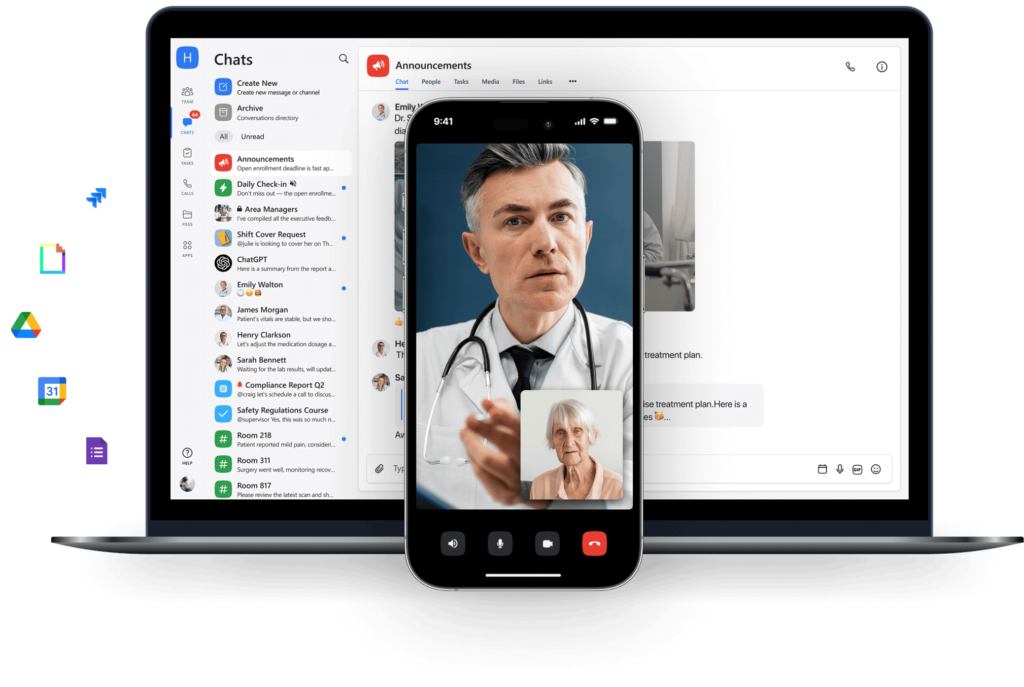 |
Chanty can function as HIPAA-compliant software when deployed with appropriate configurations and administrative safeguards. It supports secure team messaging, controlled access permissions, and centralized communication – reducing the risk of PHI being shared through unsecured channels. When combined with appropriate configurations, internal policies, and a Business Associate Agreement (BAA), Chanty can be used to support compliant communication workflows for healthcare teams.
Essential HIPAA-related features:
- Centralized team communication instead of fragmented messaging tools
- Role-based access and administrative controls
- Reduced reliance on unsecured email or consumer chat apps
- Support for BAAs and organizational compliance policies
- Designed to fit into regulated team communication environments
TigerConnect
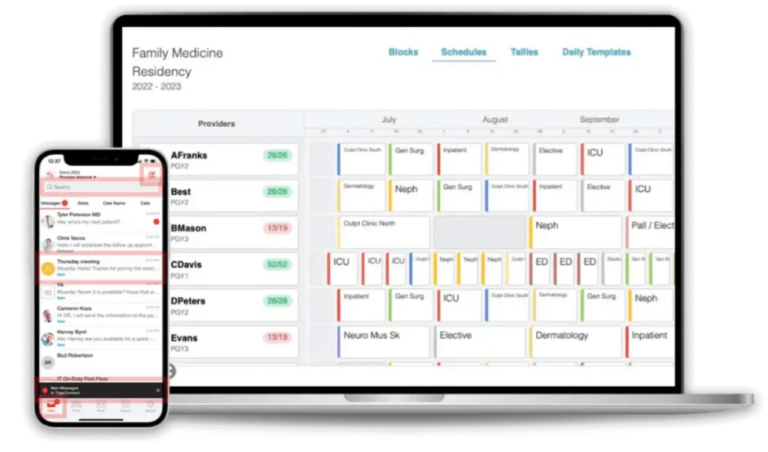
TigerConnect qualifies as HIPAA-compliant software by implementing encryption for data in transit and at rest, strict role-based access controls, and detailed audit logs that track every interaction involving PHI. The platform also supports secure authentication and integrates with EHR systems to maintain continuity and accountability across clinical workflows. A signed Business Associate Agreement (BAA) ensures regulatory responsibility is clearly defined.
Essential HIPAA-related features:
- End-to-end encryption for all communications
- Role-based access controls and secure authentication
- Comprehensive audit logs for PHI access and activity
- Native EHR integrations to reduce data silos
- BAA support for regulatory accountability
Spok
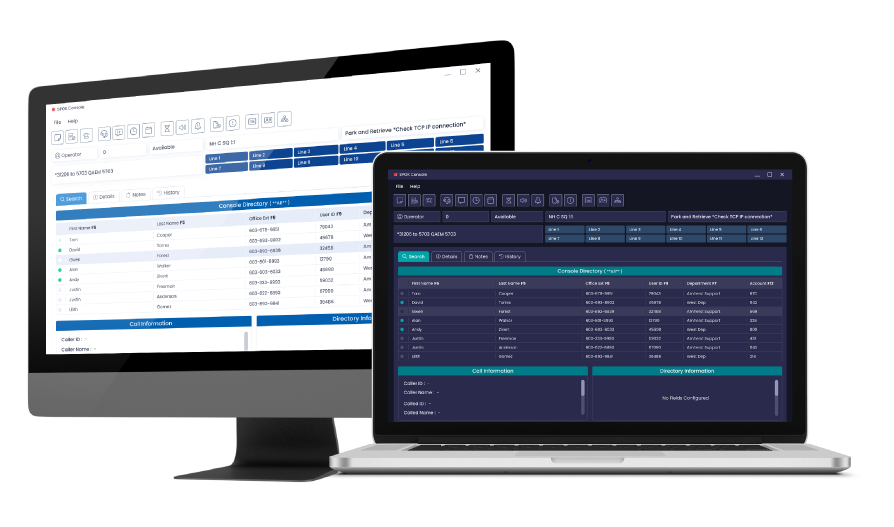
Spok is designed to support HIPAA-compliant clinical communication, particularly in high-acuity and hospital settings. It provides encrypted messaging, secure alert delivery, and detailed communication logging. With administrative controls and BAAs in place, Spok helps organizations manage PHI securely during urgent notifications and on-call coordination.
Essential HIPAA-related features:
- Encrypted clinical messaging and alerts
- Secure on-call scheduling and notifications
- Detailed audit trails for message activity
- Administrative oversight and access management
- Business Associate Agreement availability
OhMD
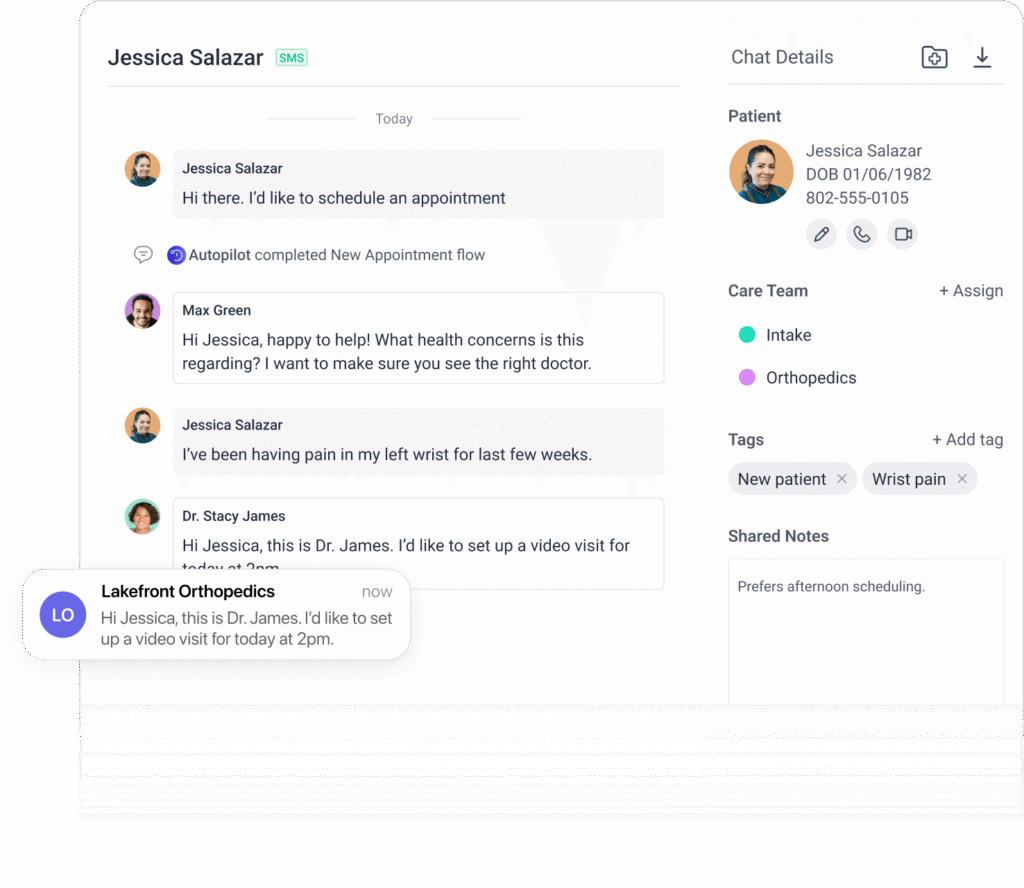
OhMD supports HIPAA-compliant messaging between healthcare teams and patients when used with proper safeguards. Messages are encrypted, user access is authenticated, and communication activity is logged. EHR integrations help limit unnecessary duplication of PHI, while BAAs formalize compliance responsibilities.
Essential HIPAA-related features:
- Encrypted messaging for team and patient communication
- User authentication and controlled access
- Audit trails for message history involving PHI
- EHR integrations to reduce duplicate data handling
- BAA support for compliance assurance
HIPAA-compliant telehealth platforms
Telehealth platforms are designed specifically for remote patient care, where PHI is exchanged in real time during consultations. These tools must secure live audio and video, control session access, and limit unnecessary data retention.
Unlike general video tools, HIPAA-compliant telehealth software is built around clinical workflows and formal compliance agreements.
Updox
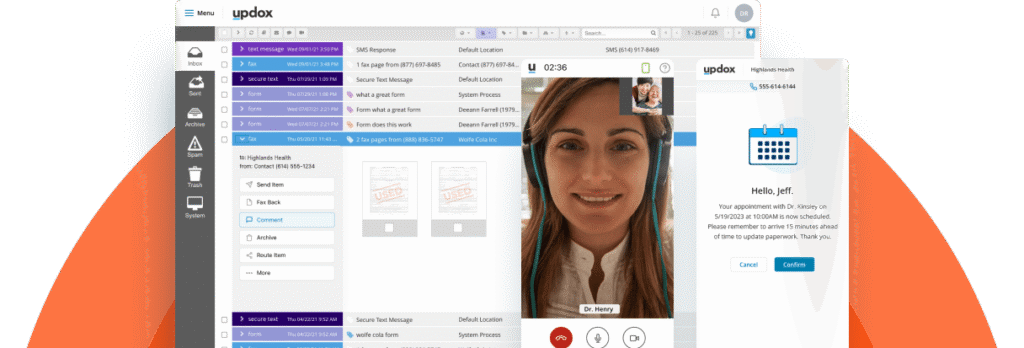
Updox is designed to support HIPAA-compliant use across multiple communication channels, including messaging, video, and document sharing. The platform applies encryption, access controls, and audit logging to help organizations manage PHI securely. When deployed with appropriate policies and a BAA, Updox can support compliant communication workflows.
Essential HIPAA-related features:
- Encrypted messaging, video calls, and document sharing
- Access controls across all communication channels
- Audit logs for compliance monitoring
- Centralized administrative management
- Business Associate Agreement availability
Doxy.me
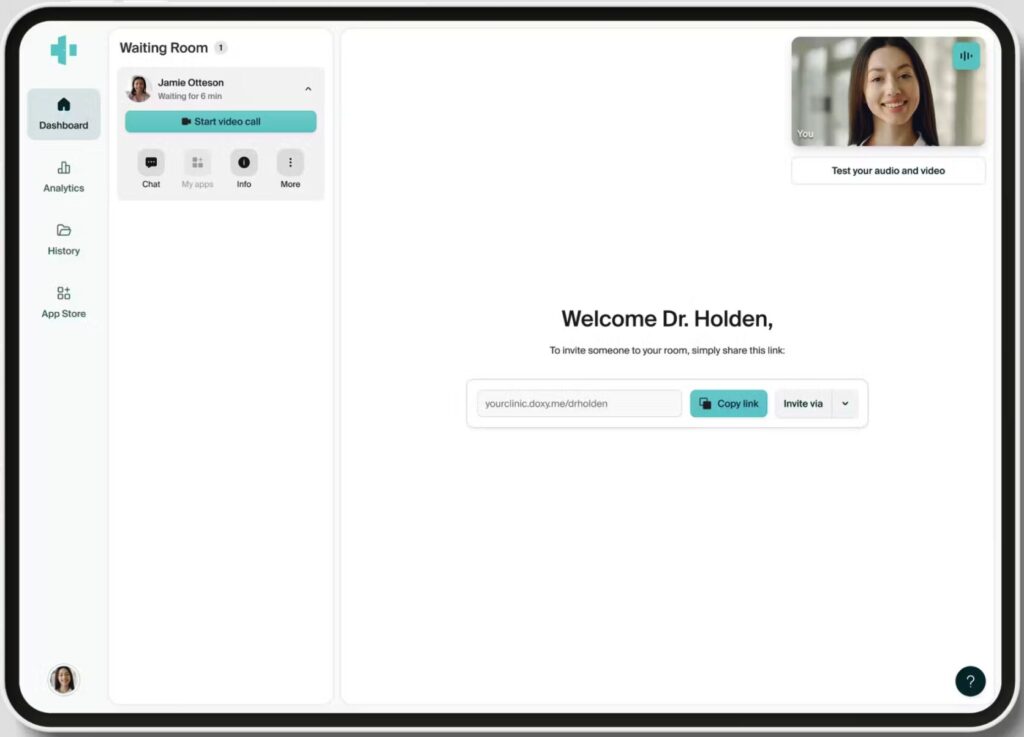
Doxy.me supports HIPAA-compliant telehealth communication by providing encrypted video sessions, secure access controls, and audit logging. With BAAs in place and proper organizational use, the platform helps limit PHI exposure during remote consultations.
Essential HIPAA-related features:
- Encrypted video consultations
- Secure session access and controls
- Audit logging for telehealth activity
- Minimal data retention to reduce exposure
- Business Associate Agreement support
VSee
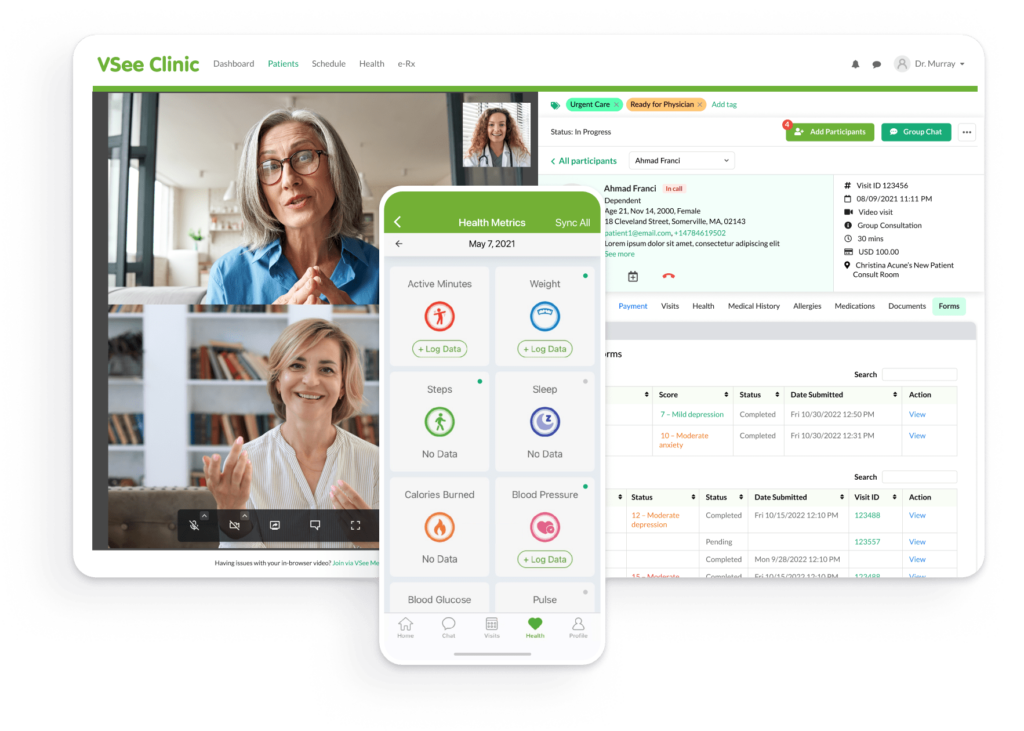
VSee enables HIPAA-compliant telehealth with end-to-end encrypted video, secure messaging, and optional workflow integration. A BAA ensures regulatory responsibility, helping healthcare providers safely manage PHI during remote consultations.
Essential HIPAA-related features:
- End-to-end encrypted video and audio
- Secure messaging and session controls
- Audit logging for PHI activity
- Optional virtual waiting rooms and workflow integration
- Business Associate Agreement support
Paubox Email Suite
Paubox Email Suite is built to support HIPAA-compliant email communication by automatically encrypting inbound and outbound messages. This approach reduces reliance on manual encryption processes, which are a common source of HIPAA violations. With audit logging, data loss prevention, and BAAs in place, Paubox helps organizations protect PHI in email workflows.
Essential HIPAA-related features:
- Automatic email encryption (no manual steps required)
- Data loss prevention (DLP) controls
- Audit logging for email activity
- Secure file attachments and email delivery
- Business Associate Agreement support
HIPAA-compliant cloud storage and document management
Document storage platforms protect medical records, attachments, consent forms, and shared files that contain PHI. These systems apply encryption at rest and in transit, enforce permissions, and maintain audit trails for regulatory oversight.
While not always visible in daily workflows, secure storage is essential for long-term compliance and risk management.
Amazon Web Services (AWS)
Amazon Web Services (AWS) supports HIPAA compliance through a combination of robust security infrastructure, configurable controls, and a Business Associate Agreement (BAA) that covered entities can sign to ensure regulatory responsibility is clearly defined. When properly configured with encryption, access controls, and audit logging, AWS can securely store and process electronic protected health information (ePHI) at scale. It also aligns its HIPAA risk management with higher security standards such as FedRAMP and NIST 800-53, making it suitable for large healthcare organizations and custom cloud deployments.
Essential HIPAA-related features:
- Encryption for data at rest and in transit
- Configurable access controls and identity management
- Detailed logging and monitoring for ePHI activity
- Scalable infrastructure for custom healthcare applications
- BAA support with covered services
Tresorit
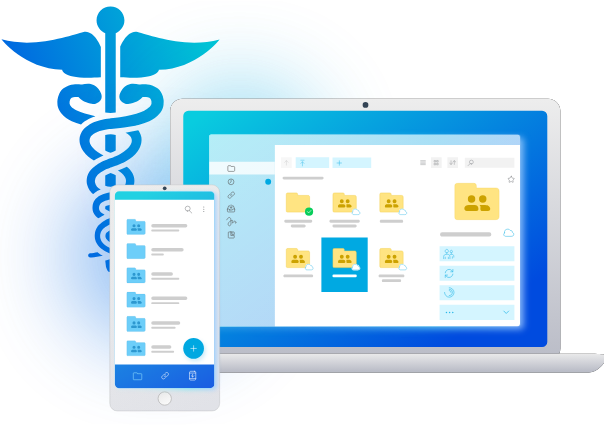
Tresorit is a security-focused cloud storage provider built on zero-knowledge, end-to-end encryption that ensures only authorized users can access protected files – even Tresorit’s own servers cannot decrypt the stored data. This approach helps healthcare organizations keep ePHI secure and supports HIPAA compliance when a BAA is in place. Tresorit is especially popular among teams prioritizing privacy and collaboration features such as secure file sharing and granular access controls.
Essential HIPAA-related features:
- Zero-knowledge end-to-end encryption for all files
- Secure file sharing with granular permission controls
- Audit trails and activity monitoring
- Cross-platform access with strong authentication
- BAA support and compliance guidance
HIPAA-compliant scheduling and practice management software
Scheduling tools handle operational data such as appointments, provider availability, and patient identifiers. Even limited exposure of this information can create compliance risks if handled through unsecured systems.
HIPAA-compliant scheduling software applies access controls, secure notifications, and audit logging to protect PHI within administrative workflows.
Zanda
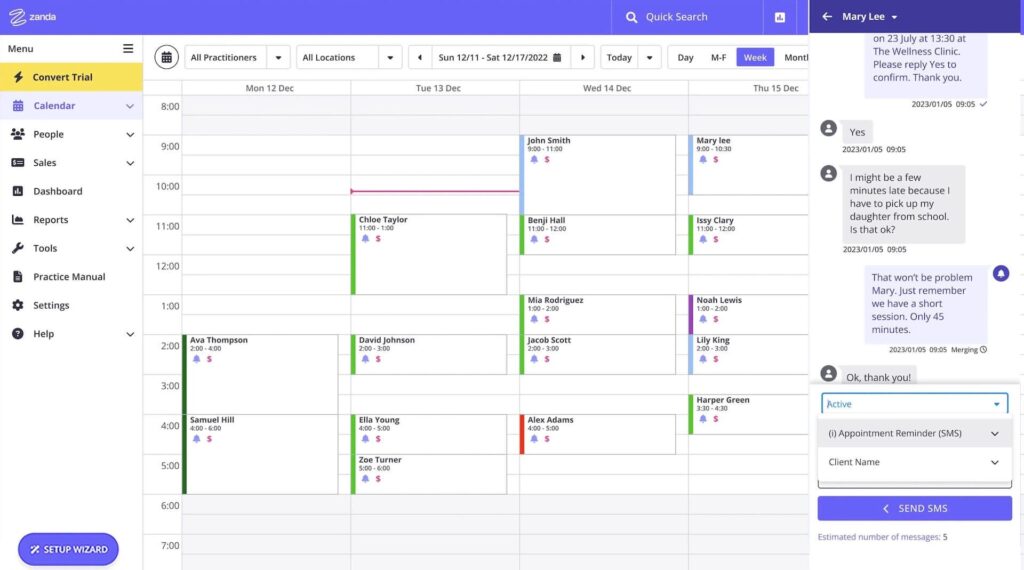
Zanda supports HIPAA‑compliant practice management and scheduling by offering secure calendar tools, online bookings, client record management, and encrypted telehealth integration. With proper use and security configurations, the platform helps protect PHI throughout appointment coordination and clinical workflows.
Essential HIPAA‑related features:
- Secure online appointment scheduling and reminders
- Permission‑based access controls and client portals
- HIPAA‑compliant telehealth integration
- Encrypted data management for client records
- Tools to reduce administrative overhead while protecting PHI
Tebra
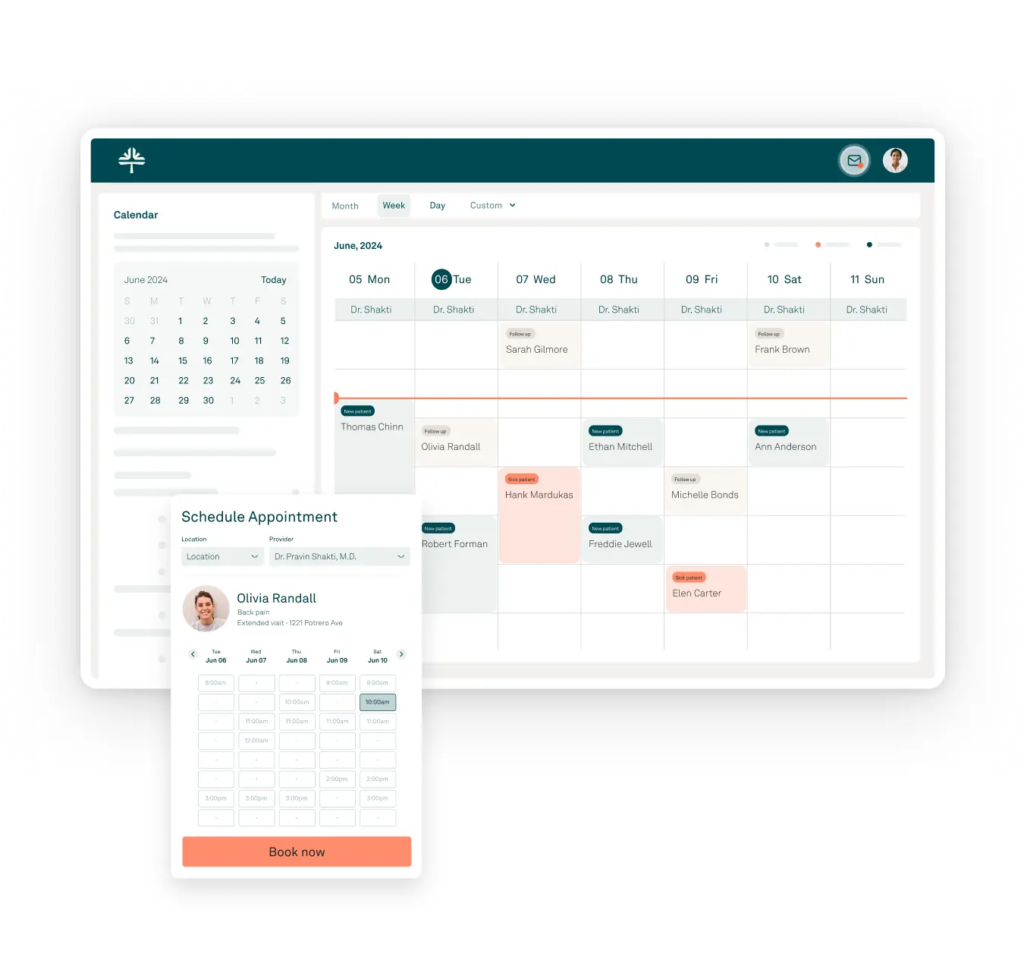
Tebra provides HIPAA‑compliant practice management with integrated scheduling, patient intake, and secure communication workflows. Built‑in encryption, role‑based access controls, and audit trails help safeguard electronic protected health information (ePHI) across scheduling, clinical documentation, and messaging.
Essential HIPAA‑related features:
- HIPAA‑compliant online scheduling and patient intake
- Encrypted messaging and secure patient portal
- Role‑based permissions and access controls
- Audit logging for PHI activity
- Integrated practice management for scheduling, billing, and care coordination
HIPAA-compliant accounting and billing software
Accounting and billing systems frequently reference PHI alongside financial and insurance data. HIPAA-compliant solutions apply safeguards to prevent unauthorized access to patient-linked financial records.
While this category is often overlooked, it plays a key role in administrative compliance.
Practice Better
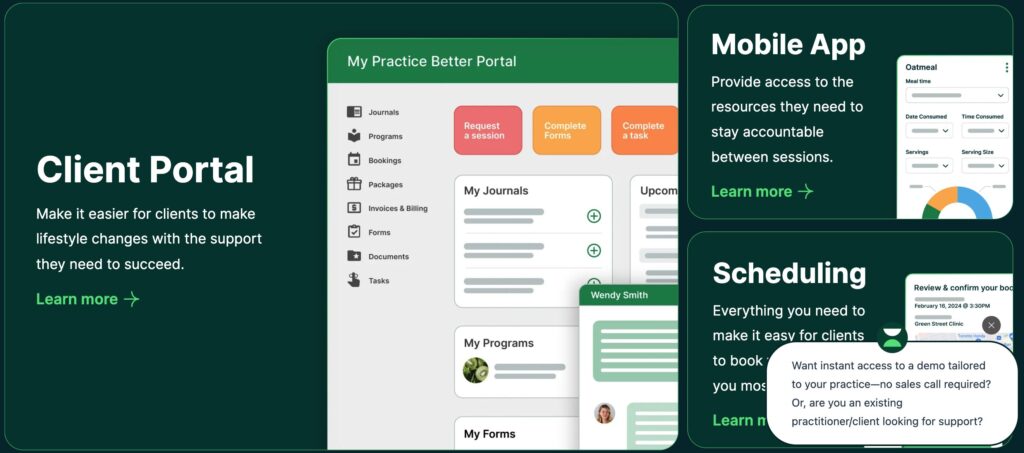
Practice Better is designed to support HIPAA-compliant practice management and telehealth workflows. It combines encrypted data storage, secure messaging, access controls, and audit trails across scheduling, charting, and virtual care. When used with appropriate administrative safeguards and BAAs, it can support compliance across the patient data lifecycle.
Essential HIPAA-related features:
- Encrypted storage of patient data and records
- Secure messaging and telehealth communication
- Role-based access controls
- Audit trails across clinical workflows
- Compliance documentation and BAA availability
Sage Intacct
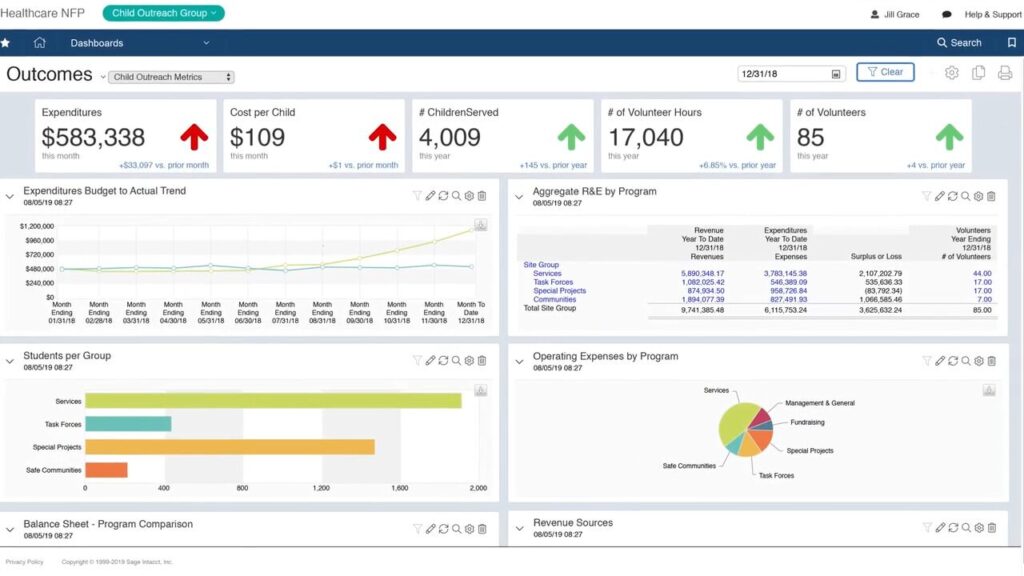
Sage Intacct offers HIPAA‑compliant cloud accounting and billing software tailored for healthcare organizations by combining secure financial management with regulatory safeguards. With Advanced Audit Trail and robust security controls certified as HIPAA and HITECH compliant, the platform helps protect electronic protected health information (PHI) that may be used in financial and billing processes. When used with appropriate policies and a signed Business Associate Agreement (BAA), Sage Intacct helps healthcare practices keep financial data secure and aligned with compliance requirements.
Essential HIPAA‑related features:
- HIPAA and HITECH‑certified safeguards with Advanced Audit Trail for monitoring access to sensitive data
- Secure encryption and access controls to protect PHI in accounting and billing workflows
- Detailed audit logs for tracking financial and billing activity
- Integration with healthcare systems (e.g., EMR) to streamline clinical and financial data
- Business Associate Agreement support for regulatory accountability
HIPAA-compliant transcription software
Transcription tools process voice recordings from clinical encounters, which often contain sensitive health information. HIPAA-compliant transcription software secures audio uploads, limits access, and protects stored transcripts.
Although transcription may be outsourced or automated, compliance responsibility remains with the healthcare organization.
Supanote
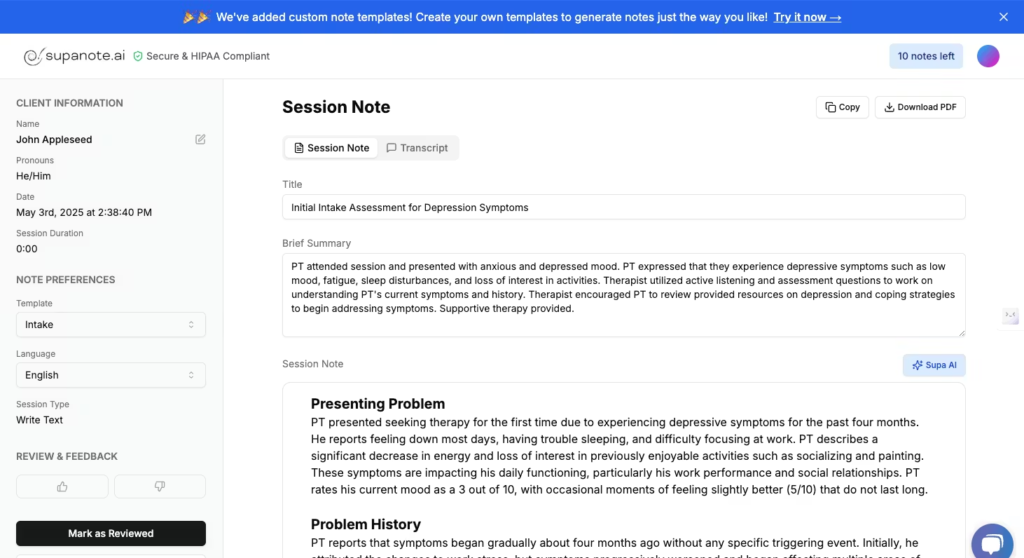
Supanote supports HIPAA‑compliant transcription by providing encrypted data handling, automatic removal of personally identifiable information (PII/PHI), and secure processing of session audio. With proper use and a signed Business Associate Agreement (BAA), the platform helps clinicians generate clinical notes while protecting PHI from exposure.
Essential HIPAA‑related features:
- Encrypted transcription and note storage
- Automatic scrubbing of PII/PHI from transcripts
- Immediate deletion of session recordings after processing
- Secure audit trails for edits and access
- Business Associate Agreement support
Upheal
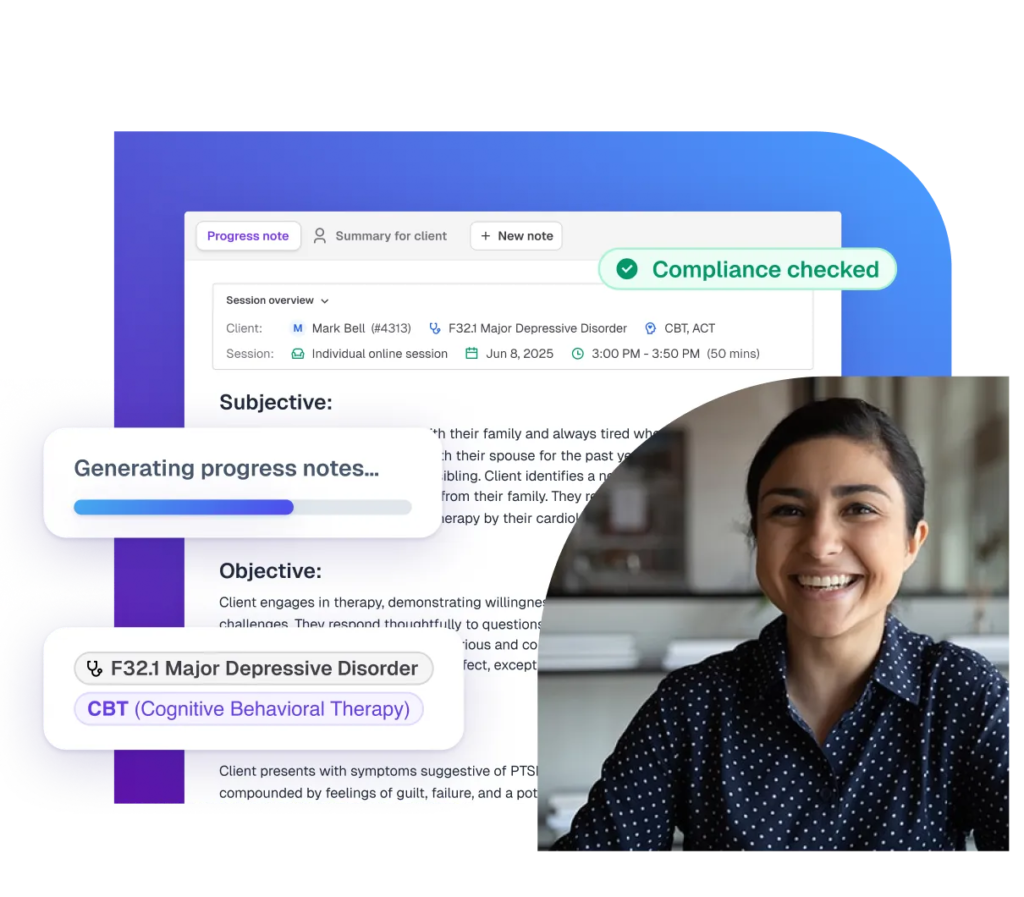
Upheal provides HIPAA‑compliant transcription and AI‑generated progress notes with secure, encrypted storage and clinical analytics. By adhering to HIPAA safeguards and offering a BAA, the platform helps mental health professionals protect PHI during session transcription, whether live or uploaded, while streamlining documentation.
Essential HIPAA‑related features:
- End‑to‑end encrypted transcription and storage
- Secure handling of ePHI for both live and recorded sessions
- Integrated clinical analytics and progress note generation
- Access controls and audit logging
- Business Associate Agreement support
HIPAA-compliant survey and patient intake software
Survey and intake tools collect PHI directly from patients through forms, assessments, and questionnaires. HIPAA-compliant platforms ensure this data is encrypted, securely stored, and accessible only to authorized users.
This category is often embedded within larger systems rather than offered as standalone software.
JotForm
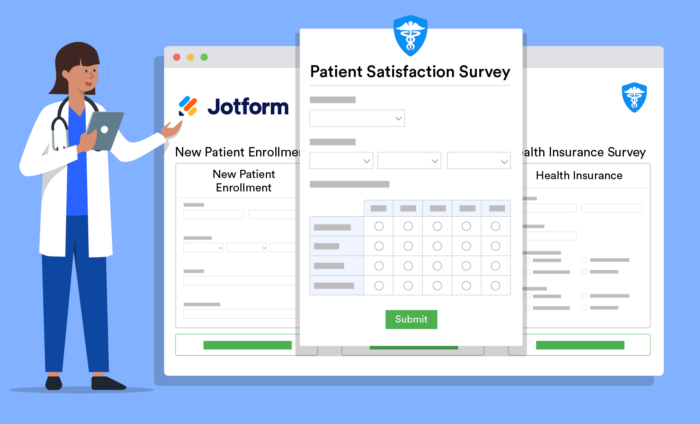
JotForm enables HIPAA‑compliant survey and patient intake form creation by offering encrypted data submission, secure storage, and customizable form templates for clinical workflows. With a signed Business Associate Agreement (BAA) and activation of its HIPAA‑friendly mode on eligible plans (Gold or Enterprise), the platform helps practices safely collect PHI via intake forms, consent questionnaires, and feedback surveys.
Essential HIPAA‑related features:
- End‑to‑end encryption for form data in transit and at rest
- Secure patient intake and consent form creation
- Audit‑ready activity logs and protected workflows
- Secure e‑signatures and payment collection options
- Business Associate Agreement support for regulatory compliance
HIPAA-compliant software comparison for healthcare teams
| Software | Primary use case | Supports HIPAA-compliant use | Key compliance-supporting features | What makes it stand out |
|---|---|---|---|---|
| Chanty | Team communication and collaboration | Yes, when properly configured | Centralized secure messaging, role-based access, administrative controls, reduced reliance on unsecured tools | Simple, intuitive interface for everyday team communication without clinical complexity |
| TigerConnect | Clinical messaging and care coordination | Yes | Encryption in transit and at rest, role-based access control, audit logs, EHR integrations | Built specifically for clinical workflows with deep EHR integration |
| Spok | Clinical alerts and on-call communication | Yes | Encrypted alerts, secure messaging, audit trails, administrative oversight | Highly reliable alerting and paging for hospitals and high-acuity environments |
| OhMD | Patient and team messaging | Yes | Encrypted messaging, user authentication, audit trails, EHR integration | Strong emphasis on patient engagement alongside internal communication |
| Updox | Patient communication and telehealth | Yes | Secure messaging, video visits, document sharing, audit logging | All-in-one patient communication platform combining messaging, fax, video, and files |
| Paubox Email Suite | Secure healthcare email | Yes | Automatic email encryption, data loss prevention, audit logging | Email encryption with no manual steps for staff or recipients |
| Doxy.me | Telehealth video consultations | Yes | Encrypted video sessions, secure access controls, minimal data retention | Extremely low barrier to entry. No downloads or patient accounts required |
| VSee | Telehealth and virtual care delivery | Yes | End-to-end encrypted video and audio, secure messaging, audit logging, virtual waiting rooms | Telehealth-first design with built-in clinical workflows |
| Pexip Health | Healthcare video conferencing | Yes | Encrypted video and audio, access controls, EHR workflow support, flexible deployment | Enterprise-grade video infrastructure with cloud, on-premises, or hybrid deployment |
| Amazon Web Services (AWS) | Cloud infrastructure and data storage | Yes, for covered services | Encryption at rest and in transit, identity and access management, logging and monitoring | Highly scalable infrastructure aligned with NIST and FedRAMP standards |
| Tresorit | Secure cloud storage and file sharing | Yes | Zero-knowledge end-to-end encryption, granular permissions, audit trails | Privacy-first file storage where even the provider cannot access data |
| Zanda | Practice management and scheduling | Yes | Secure scheduling, encrypted client records, permission-based access, telehealth integration | Practice management built around scheduling and operational efficiency |
| Tebra | Practice management and patient intake | Yes | Encrypted scheduling and intake, role-based access, audit logs, patient portal | Unified platform for scheduling, intake, communication, and care coordination |
| Sage Intacct | Accounting and healthcare billing | Yes | Secure encryption, access controls, advanced audit trails, compliance certifications | Enterprise-grade financial management with healthcare-ready auditability |
| Practice Better | Practice management and telehealth | Yes | Encrypted data storage, secure messaging, access controls, audit trails | Combines scheduling, charting, billing, and telehealth in one platform |
| Supanote | Clinical transcription | Yes | Encrypted transcription, PHI scrubbing, session deletion, audit trails | Automatic removal of PHI from transcripts to reduce exposure risk |
| Upheal | AI transcription and clinical documentation | Yes | End-to-end encrypted transcription, secure storage, access controls, audit logging | Mental health-focused transcription with analytics and progress notes |
| JotForm | Patient intake forms and surveys | Yes, on eligible plans | Encrypted data collection, secure storage, audit-ready logs, e-signatures | Highly flexible form builder with dedicated HIPAA mode |
Final thoughts
In healthcare settings, communication is never neutral. A short message can carry sensitive clinical context, patient identifiers, or decisions that affect outcomes. That’s why protected health information is treated as something almost sacred – shared only when necessary, and only through systems that are designed to safeguard it. HIPAA-compliant software exists not to slow teams down, but to make sure collaboration happens without introducing avoidable risk.
The reality of clinical work leaves little room for technical workarounds. After long shifts, night duty, or emergency situations, healthcare professionals need tools that are reliable, intuitive, and compliant by design. As we’ve discussed, different HIPAA-compliant software solutions support this goal in different ways – whether through secure clinical messaging, telehealth, patient engagement, or broader team coordination. Choosing the right platform means choosing what aligns with your workflows, staffing model, and communication intensity, without adding cognitive or administrative burden.
For interprofessional teams that rely on constant coordination – nurses, physicians, care coordinators, and administrative staff – Chanty provides a secure team communication environment that can support HIPAA-compliant use when properly configured. By centralizing conversations and reducing dependence on unsecured tools, Chanty helps teams communicate clearly and consistently, so compliance supports care but doesn’t compete with it.