
Before the doctor walks in, before the diagnosis, before the prescription – there is a form. And more often than we admit, that form is where things start to go wrong.
A 67-year-old man sits in a waiting room, clipboard balanced on his knee. He’s here for a pre-surgical consultation. The form asks for his current medications. He pauses, trying to remember the name of the blood thinner he started a couple of months ago. It’s on the tip of his tongue, but not quite there. After a moment, he leaves the field blank.
No one catches it. Not at the desk, not during intake, not in the exam room. Three days later, what should have been a routine procedure turns into a crisis. Not because anyone was careless, but because something small, and entirely predictable, slipped through
This isn’t a story about a careless patient or an overworked nurse. It’s a story about a broken process dressed up as a normal one. The paper clipboard, the waiting room rush, the manual transfer of handwritten data into an EHR – these aren’t unfortunate side effects of healthcare administration. They’re the source of a large, preventable category of clinical and operational errors.
Intake form software exists to remove exactly this kind of risk from the equation. But before we look at the tools, it’s worth understanding what patient intake really means, why the stakes are higher than most people realize, and where the most common failure points live.
Best intake form software for medical practices
- JotForm – best for flexibility & smaller practices
- Phreesia – best for large health systems
- IntakeQ – best for therapists & allied health
- Luma Health – best for automated patient journeys
- DoctorConnect KIRA – best for AI-powered compliance
What is intake form software?
Intake form software is a digital platform that replaces paper patient registration forms with secure, customizable online forms that patients complete before their appointment – from home, from their phone, from anywhere. When it works well, it eliminates the clipboard entirely.
At its core, intake form software handles the collection of:
- Personal and contact information
- Insurance details and authorization
- Medical history, current medications, and allergies
- Current symptoms and reason for visit
- Consent to treatment and billing authorization
A good platform doesn’t just digitize the paper version of these questions – it restructures the entire pre-visit workflow. Required fields ensure nothing critical is missed. Smart logic skips irrelevant questions. Data flows directly into the EHR without anyone retyping it. Insurance is pre-verified before the patient walks in the door.
Think of it as the difference between a questionnaire and an intelligent intake process. One collects information. The other actively reduces friction, errors, and risk at every step.
Why patient intake software is critical for healthcare operations?
The intake form is the first clinical document in a patient’s care journey. It’s also, structurally, the one piece of documentation that the patient creates themselves – without a clinician present to guide, correct, or clarify in real time. That makes it uniquely vulnerable to error, and uniquely powerful when it works correctly.
Benefits of patient intake software:
- Reduces administrative workload for front desk staff
- Improves accuracy of patient-provided data
- Minimizes risk of missing critical medical information
- Enables faster and more efficient patient check-in
- Supports secure, HIPAA-compliant data handling
- Ensures better coordination between clinical and administrative teams
Consider what a well-designed intake process actually delivers. It ensures that the physician walking into the exam room already has a complete picture: known allergies, current medications, relevant family history, the reason for the visit, and how long the patient has been experiencing symptoms. It’s the difference between a doctor who has to spend the first five minutes gathering baseline information and one who can spend those five minutes actually listening.
For the administrative team, good intake software means that insurance verification happens automatically before the appointment – not at the front desk during check-in, with a line of patients waiting behind. It means billing disputes are rarer because the data was clean from the start. It means no one is squinting at handwriting drug names, trying to determine whether the patient wrote “Lioitor” or “Lipitol.”
When patients fill out forms at home (relaxed, with time to look things up), they provide more accurate and complete medical histories. Rushed waiting room paperwork produces incomplete records. Incomplete records produce diagnostic gaps, and diagnostic gaps produce adverse events.
And there is a regulatory dimension that too many practices treat as secondary until something goes wrong. HIPAA requires that protected health information (PHI) be handled with specific technical safeguards. A paper form sitting on a receptionist’s desk while three people walk past it does not meet that standard. Digital intake form software with encryption, access controls, and signed Business Associate Agreements (BAAs) does.
Common patient intake process failures in healthcare
Most intake problems aren’t dramatic. They’re quiet, systemic, and cumulative – and they tend to cluster around four predictable points.
- The blank field problem
Paper forms have no enforcement mechanism. A patient can leave a field blank, and unless the receptionist catches it – in a busy waiting room, while also answering phones and processing insurance cards – it stays blank. Digital intake form software solves this with required fields and inline validation. The form simply won’t submit without the critical information. It’s one of the most straightforward interventions in healthcare administration, and it’s still not standard practice in a large portion of small and mid-size practices.
- The data transfer gap
Even when a paper form is filled out completely and legibly, someone has to type that information into the EHR. Every transcription is an opportunity for error. A date of birth transposed by one digit can cascade into billing disputes, mismatched records, and, in connected systems, potentially dangerous clinical confusion. Intake form software with direct EHR integration eliminates this entirely. Data goes from patient’s device to the electronic health record without a human in the middle.
The gap most ignore: Even when practices use digital intake software, many still print the submitted forms and manually retype them into their EHR. At that point, you have digitized the collection but not the workflow. Integration is not optional – it’s the point.
- The timing problem
Giving a patient a form the moment they walk in is already too late. They’re anxious, distracted, possibly in pain, possibly running late. They’ll rush through it. They’ll skip anything that requires them to look something up. The best intake processes send forms 24 to 48 hours before the appointment, via SMS or email, so patients can complete them from home. Completion rates go up. Quality of responses goes up. Wait times go down. The front desk can focus on actual patient care rather than form processing.
- The communication breakdown
Intake doesn’t end when the patient submits the form. The information needs to reach the right people: the nurse for pre-visit triage, the billing department for insurance verification, the physician for clinical review. In practices without automated routing, forms sit in inboxes, get forwarded manually or even get missed. Modern intake form software routes completed forms to their right team members based on configurable rules – automatically, the moment the patient hits submit. When integrated with AI IVR, these routing capabilities can also help direct patients to the appropriate department based on their needs.
Best intake form software in 2026
Not every practice needs the same solution. What works for a single-physician family practice is a poor fit for a multi-specialty health system with 200 daily visits. Here are the tools worth knowing – selected for breadth, depth of integration, HIPAA credibility, and real-world usability.
JotForm
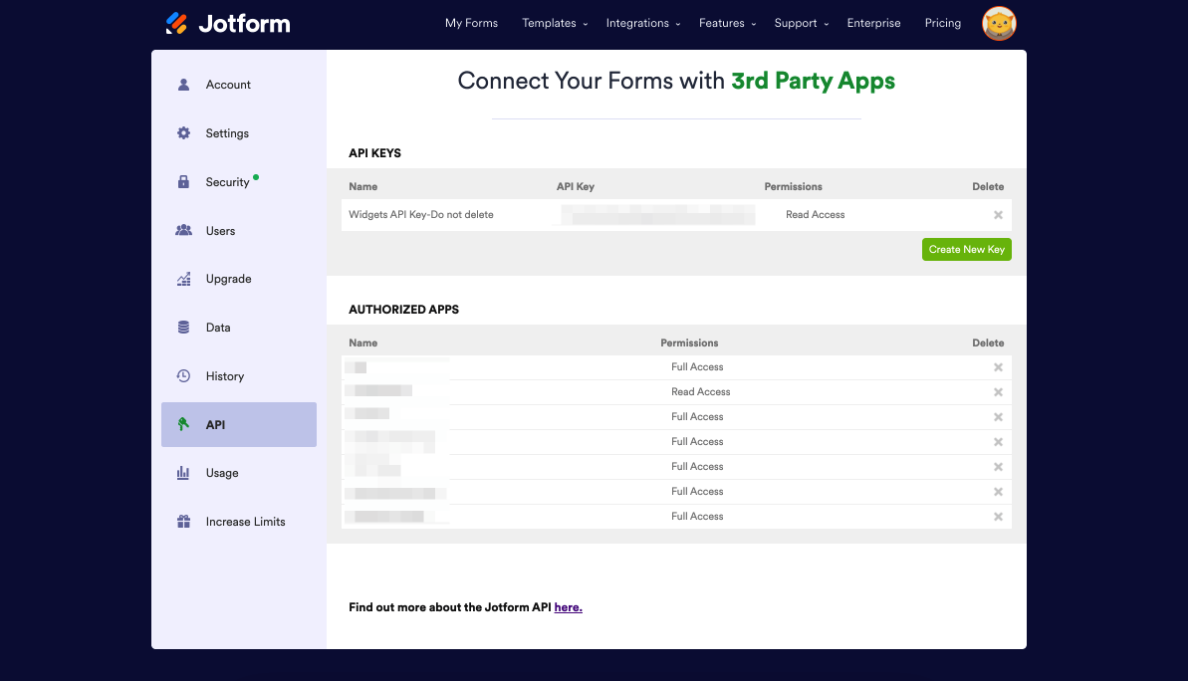
The form builder that makes HIPAA-compliant intake accessible to practices of any size – without a developer on staff.
JotForm is not a purpose-built clinical system, and that’s precisely what makes it so useful for a large segment of healthcare providers. Its strength is speed and customization: a practice can go from blank form to published, HIPAA-friendly intake workflow in minutes, using a drag-and-drop builder and a library of over 600 pre-built healthcare templates. For clinics, private practices, telehealth services, and specialty providers who need professional-grade intake forms without enterprise-scale complexity or pricing, JotForm sits at the intersection of accessibility and serious functionality.
For medical staff, the practical value is clear. Patients receive a form link via email or SMS, complete it on any device before their appointment, and submit it securely. The front desk never has to chase paper. Submissions are encrypted, stored in a secure database, and accessible from anywhere – and on eligible plans, JotForm provides a signed BAA and full HIPAA-friendly features, including encrypted submissions and secure cloud storage with partners like Box and Dropbox.
- HIPAA-friendly features with BAA (paid plans)
- 600+ healthcare form templates
- Drag-and-drop builder, no coding
- E-signature support
- Conditional logic for smart forms
- File uploads (insurance cards, labs)
- 150+ third-party integrations
- Mobile-friendly by default
Best for: Private practices, clinics, telehealth, mental health providers
Pricing: Free tier available; HIPAA features on paid plans
Phreesia
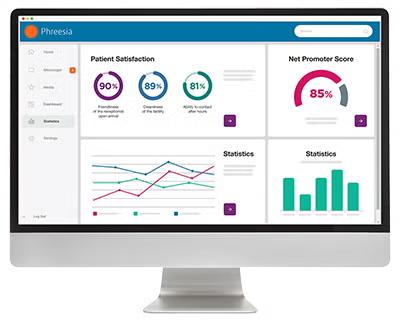
Enterprise-grade intake with deep EHR integration, insurance verification, and payment collection built in.
Phreesia is what intake looks like when it’s engineered for scale. It was built for large healthcare organizations – multi-location health systems, hospital networks, and high-volume specialty groups – where thousands of patient visits need to flow smoothly every day. The platform handles the entire pre-visit experience: digital intake forms, insurance eligibility verification, payment collection, and clinical screening questionnaires – all in a single patient-facing interface.
For clinical staff, the critical differentiator is EHR depth. Phreesia connects directly with Epic, Cerner, Athenahealth, and other major systems, meaning patient data from the intake form flows automatically into the clinical record without manual intervention. For administrators, the platform’s payment processing integration means that co-pays and outstanding balances can be addressed before the patient enters the exam room – eliminating the awkward billing conversation at check-out and significantly improving collection rates.
- Deep EHR integration (Epic, Cerner, Athenahealth)
- Insurance eligibility verification
- Integrated payment collection
- Clinical screening tools
- Multi-location support
- Patient-facing kiosk and mobile options
Best for: Health systems, multi-location groups, high-volume practices
Pricing: Custom quote
IntakeQ
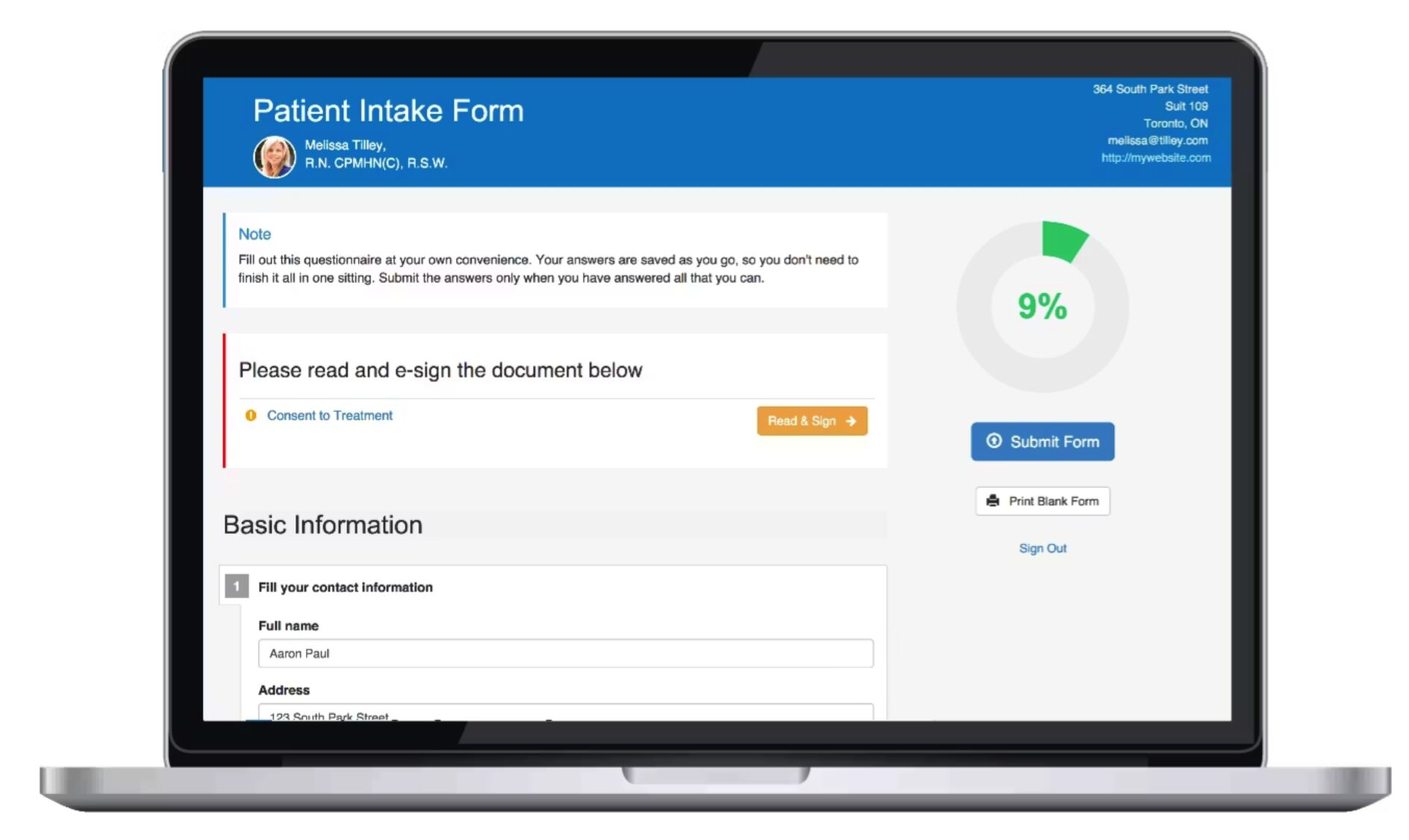
Purpose-built for clinicians who want professional digital intake without enterprise complexity or price tags.
IntakeQ occupies a focused niche that it fills exceptionally well: healthcare professionals and clinicians – therapists, counselors, physical therapists, nutritionists, and similar practitioners – who need HIPAA-compliant digital intake forms without the overhead of a full practice management system. The platform is web-based, straightforward to configure, and consistently well-reviewed for both the clinician experience and the patient-facing form interface.
What makes IntakeQ particularly useful for clinical staff is its combination of customizable form templates with built-in appointment scheduling. A patient can receive a booking confirmation that automatically includes the intake form link – so the administrative and clinical preparation happens in a single, connected step. Forms can include e-signatures, conditional logic, and file attachments. Completed submissions are organized in a secure, searchable dashboard.
- HIPAA-compliant form management
- Built-in appointment scheduling
- Custom templates with conditional logic
- E-signature support
- Automated form delivery on booking
- Patient portal access
Best for: Solo practitioners, therapists, allied health professionals
Pricing: Affordable monthly plans; free trial available
Luma Health
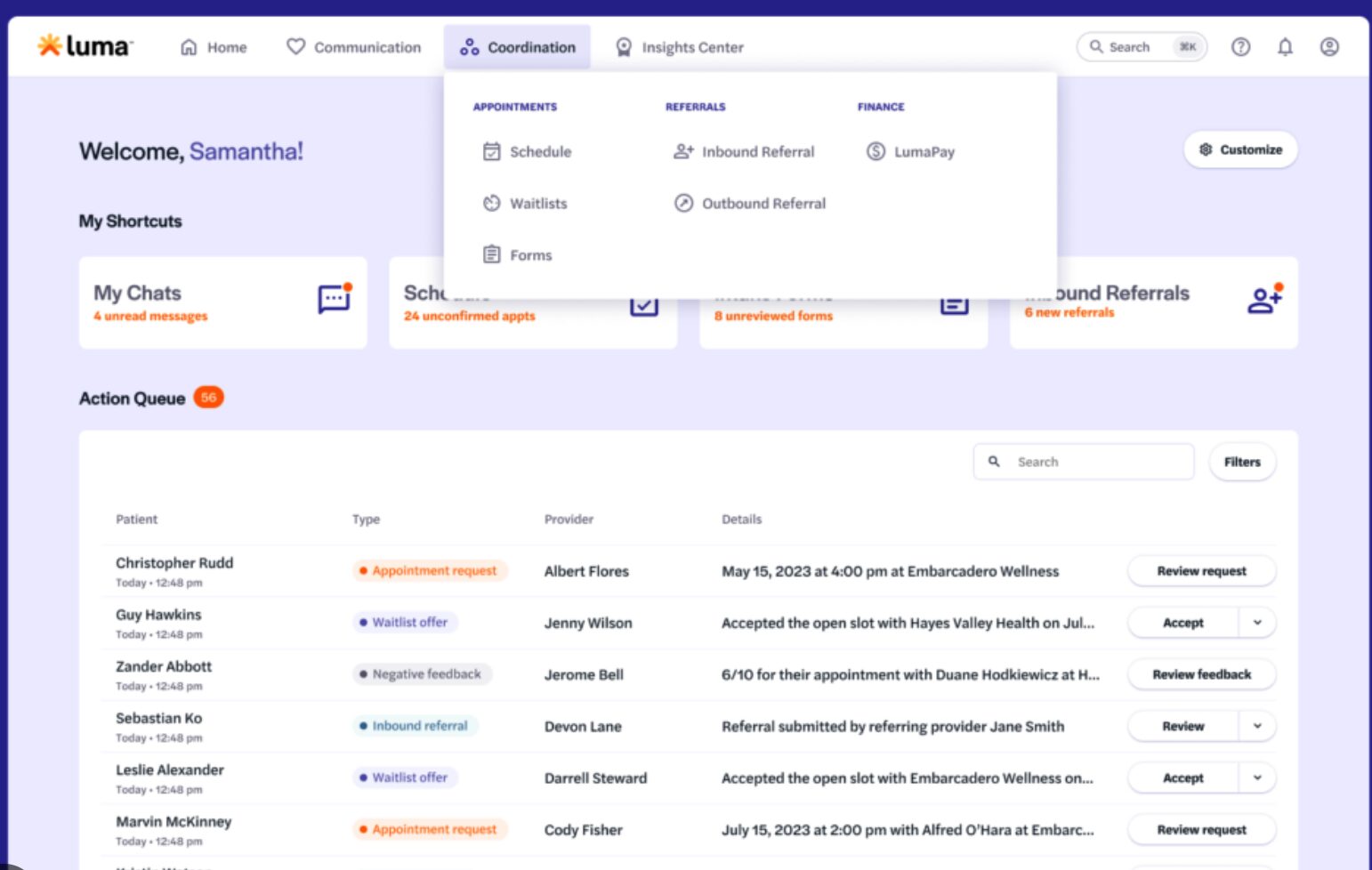
When intake is just one part of a fully automated pre-visit workflow – from referral to registration.
Luma Health calls its product a Patient Success Platform, and the framing is accurate: this is a system designed to orchestrate the entire patient journey, not just digitize a form. Its intake capability sits within a broader automation stack that includes appointment scheduling, insurance eligibility checks, two-way messaging, automated reminders, and post-visit follow-up. For health systems managing high patient volumes across multiple locations, Luma reduces the front desk workload by handling the pre-visit coordination that typically generates the most manual effort.
For medical staff, the standout feature is EHR depth – Luma integrates with over 1,000 health systems, making it one of the most interoperable platforms on the market. Its AI-powered capabilities include automated extraction of referral data from faxes and emails, turning unstructured incoming documents into structured EHR entries without staff intervention.
- 1,000+ EHR integrations
- Full patient journey automation
- AI-powered referral processing
- Two-way secure messaging
- Insurance eligibility automation
- Appointment reminders and scheduling
Best for: Enterprise health systems, multi-site groups, high-referral practices
Pricing: Custom quote based on org size
DoctorConnect KIRA
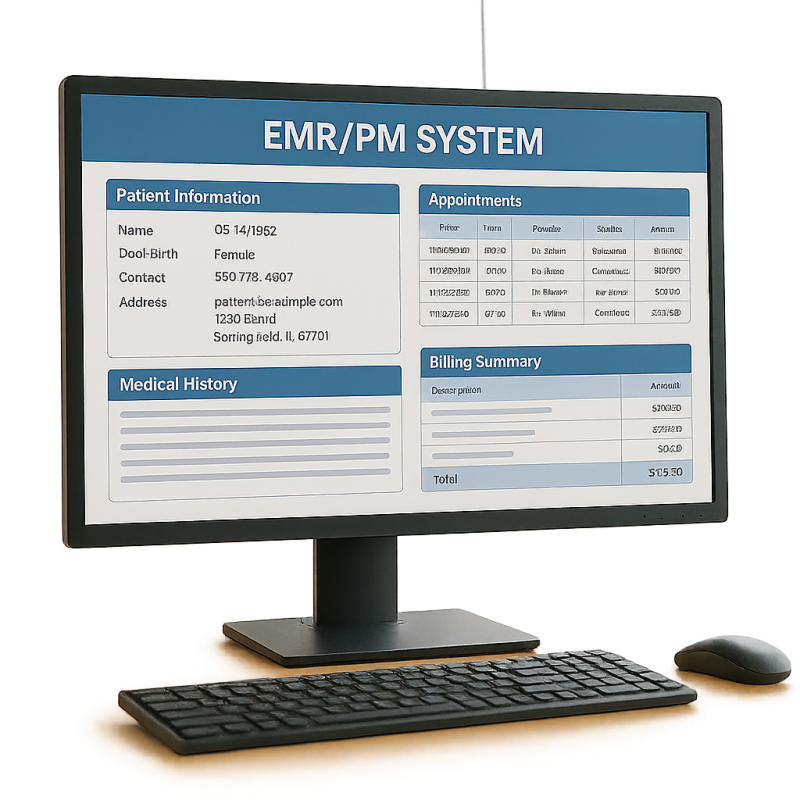
Thirty years of healthcare IT. 150+ EHR integrations. Zero HIPAA violations. The infrastructure-first choice.
DoctorConnect KIRA makes a compelling case on the basis of its track record. Built on DoctorConnect’s 30-year foundation in healthcare IT – and carrying a documented zero-violation HIPAA compliance record since 1992 – KIRA offers AI-powered autonomous intake as part of a unified platform that extends into scheduling, reminders, two-way messaging, and revenue cycle management. For practices where compliance risk and integration reliability are non-negotiable, KIRA’s infrastructure depth is genuinely differentiated.
For medical staff, KIRA’s value lies in its ability to automate the front desk without replacing clinical judgment. Patients receive mobile-optimized intake forms with no portal login required – eliminating one of the most common barriers to digital form completion. The AI layer handles routing, eligibility verification, and data extraction from legacy sources like faxed referrals. With 150+ EHR and PMS integrations, it connects to virtually any existing clinical infrastructure.
- 150+ EHR/PMS integrations
- AI-powered autonomous intake
- No patient portal login required
- Zero HIPAA violations (30+ years)
- AI scheduling and receptionist modules
- Two-way secure messaging
Best for: Risk-sensitive practices, high-volume settings, practices on complex EHR systems
Pricing: Custom quote
Intake Form Software Comparison: Side-by-Side
| Tool | HIPAA | EHR integration | Mobile | Best fit |
| JotForm | ✓ On paid plans | ✓Via integrations | ✓ | Small-mid practices |
| Phreesia | ✓ | ✓ Epic, Cerner, Athena | ✓ | Large health systems |
| IntakeQ | ✓ | Select integrations | ✓ | Therapists, allied health |
| Luma Health | ✓ | ✓ 1,000+ systems | ✓ | Enterprise, multi-site |
| DoctorConnect KIRA | ✓ 30 yr record | ✓ 150+ systems | ✓ | Compliance-sensitive |
Chanty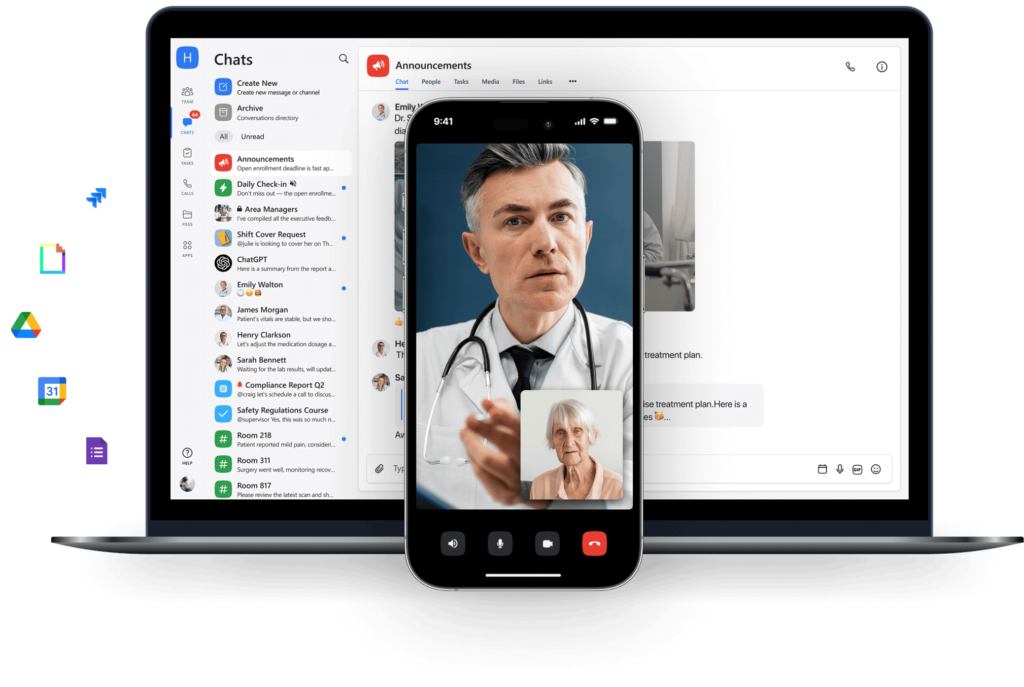 |
The tool your intake software can’t replace, but works better with
Even the most sophisticated intake form software solves only half the problem. Data can flow perfectly from patient to EHR, and your front desk can still be operating in information silos – because the challenge after intake is communication: between the nurse who reviewed the form and the physician walking in, between the billing team and the front desk, between a coordinator who spotted an urgent flag and the clinician who needs to act on it.
This is where Chanty fills a gap that no intake platform is designed to fill. Chanty is a team communication app built for fast, organized, searchable communication – and in healthcare contexts, that matters more than in most industries. A missed Slack message about a patient’s allergy is one thing in a software company. In a clinic, it’s a different category of problem entirely.
For practices using JotForm as their intake form software, there’s a direct integration path via Zapier: when a patient submits an intake form, a Zap can automatically post a notification to a designated Chanty channel – alerting the relevant care team the moment a new intake arrives, with configurable details included. No one is waiting on email. No form gets lost in an inbox. The clinical team knows a new patient is ready before the appointment even begins.
The clipboard had a good run
It’s tempting to think of intake form software as an administrative upgrade – a way to save the front desk some time. It’s actually something more fundamental: it’s the difference between a healthcare system that collects patient information and one that uses it effectively from the very first interaction.
The tools covered in this guide span a wide range of practice sizes and use cases. JotForm gives smaller practices a fast, HIPAA-friendly path to digital intake without enterprise cost or complexity. Phreesia and Luma Health bring deep EHR integration and automation to organizations managing thousands of patient visits. IntakeQ serves independent clinicians who need professional forms without the overhead. CERTIFY Health and DoctorConnect KIRA offer distinct strengths in check-in experience and compliance infrastructure, respectively.
No single platform is the right answer for every context. But the wrong answer – for any practice, in 2026 – is still the clipboard. The risks are documented. The alternatives are accessible. The patients sitting in your waiting room filling out forms by hand are the clearest signal that it’s time to change.
Choose the tool that fits your practice size and EHR stack. Pair it with clear internal communication. And give your clinical team back the time they should be spending on patients – not paperwork.
Frequently asked questions about intake form software
What is intake form software?
Intake form software is a digital platform that replaces paper patient registration forms with secure, customizable online forms. Patients complete medical history, insurance details, and consent paperwork before their appointment – from any device. It eliminates manual data re-entry, reduces errors, and ensures data flows directly into the EHR.
Why is patient intake software important in healthcare?
Paper-based intake produces blank fields, illegible handwriting, and manual transcription errors that can cause clinical harm. The average patient spends 22 minutes completing waiting-room paperwork. Digital intake form software cuts that time significantly, automates data entry, and supports HIPAA-compliant handling of protected health information.
When should patients complete intake forms?
Patients should ideally complete intake forms 24 to 48 hours before their appointment to ensure more accurate information and a faster check-in process.
What is the difference between patient intake software and a patient portal?
A patient portal is an ongoing communication hub where patients access records, messages, and test results over time. Patient intake software is specifically designed to collect registration information before an appointment – typically without requiring a patient login. Many patients abandon portals due to login friction; good intake software removes that barrier entirely.
What features should I look for in healthcare intake form software?
The most important features are HIPAA compliance (including a signed BAA), direct EHR integration, mobile-friendly design, e-signature support, required-field validation, automated form delivery via SMS or email, and routing rules that send completed forms to the right team members automatically.
Can patient intake forms integrate with EHR systems?
Yes, most modern patient intake software integrates directly with EHR systems, allowing patient data to flow automatically into clinical records without manual entry.